





Issue 170 - April 2026
NEWS: WORTHY

Olympic and World Cup Medalist Danielle Slaton to Deliver Keynote at Educational Forum
The California JPIA is pleased to announce that Danielle Slaton will be the keynote speaker at the 31st Annual Risk Management Educational Forum. In her keynote, Slaton will share lessons she’s learned about leadership, teamwork, and peak performance—on and off the field.
Drawing from her personal experience as a co-founder of Bay FC and on the U.S. Women’s National Soccer Team, where she earned a silver medal at the 2000 Olympic Games and third place at the 2003 Women’s World Cup, Slaton will share how great leaders play to their strengths and how to be at your best when it matters most. Fresh off the heels of the 2026 World Cup, she will share compelling sports stories and lessons on striving to be your best.
This year’s Forum, titled Beneath the Surface—Dive Into Risk Management, will be held at the Monterey Conference Center in Monterey from October 7 through 9, 2026. Registration for the Forum opens later this spring.
If you have questions about the Forum, visit the Risk Management Educational Forum page on the Authority’s website or email us.
Print Article
Workers’ Compensation Webinar—Investigations: Why They Matter and How You Can Make a Difference
The next Workers’ Compensation Webinar will be held on May 14, 2026, at 10:00 a.m. During the webinar, attendees will gain real-world insights into handling complex workers’ compensation claims.
Authority partners, including a claims handler, a defense attorney, and an investigator, will share their perspectives and real-world insights. Drawing on more than 90 years of combined experience, the presenters will explain when claims need to be investigated and highlight the vital role members play in ensuring the investigation’s success. If you’ve ever wondered why a claim needs to be investigated, or the role you play in the process, this webinar is for you.
Register here for your chance to learn, connect, and discover how you can make a meaningful difference in workers’ compensation claims. A recording will be available on the Authority’s website for those unable to attend the live webinar.
For any questions, please contact Jeff Rush, workers’ compensation program manager.
Print Article
Supervisor Essential Skills Training Program Summer Cohort—Registration Opening Soon
The California JPIA is offering a second cohort of the popular Supervisor Essential Skills Training Program in 2026. This cohort consists of eight classes delivered over four months, focusing on developing essential skills for peak performance.
Leading the program this year are Sharonda Bishop, founder and principal of Bishop Consulting, a human resources and training company, and Marcella Marlowe, a former city manager and adjunct associate professor at the USC Sol Price School of Public Policy. Throughout the program, participants will develop practical leadership skills through hands-on training on topics such as emotional intelligence, communication, productivity, team building, giving and receiving feedback, employee performance, and employee management.
The summer cohort will run from July through November and is hosted by the cities of Pismo Beach and Calabasas. Registration for the summer track opens on Thursday, May 14, and remains open until Friday, June 12. Training registrars will get an email announcement when registration begins.
For those seeking additional training, the Authority will offer an online Supervisor Essential Skills Series, scheduled to launch in fall 2026.
For questions, please contact the Authority’s training department.
Print ArticleCOVERAGE MATTERS

Annual Recurring Evidence of Coverage Processing for 2026–27
Each year, member agencies are required to review and process their recurring Evidence of Coverage (EOC) records to ensure they meet the coverage requirements of requesting entities. For the upcoming endorsement period, July 1, 2026–June 30, 2027, designated risk managers will receive an email notification with instructions regarding the review and submission process.
EOC records will be available for review from Monday, May 4, through Thursday, June 18, and can be accessed on the recurring EOC webpage. It is important to coordinate with relevant staff members who have recurring EOCs on the list to ensure that all EOCs are issued in a timely manner. For each EOC record, one of the following actions must be taken:
- Reissue
- Edit
- No longer needed
If you have any questions about the recurring EOC process, please contact Management Analyst Edith Vazquez.
Print ArticleRISK SOLUTIONS

Title II Digital Accessibility Rule: Revised Deadlines and Practical Next Steps for Member Agencies
In April 2024, the U.S. Department of Justice (DOJ) issued a final rule updating its regulations under Title II of the Americans with Disabilities Act (ADA) to establish clear requirements for the accessibility of web content and mobile applications provided by state and local governments. The DOJ has formally adopted Web Content Accessibility Guidelines (WCAG) 2.1, Level AA as the technical standard for evaluating accessibility. WCAG 2.1, Level AA conformance includes all Level A requirements, plus additional, more comprehensive criteria (Level AA) to address a wider range of accessibility barriers. Because the levels are cumulative, meeting Level AA standards automatically ensures that all Level A criteria are also met. WCAG 2.1, Level AA addresses accessibility for individuals with visual, hearing, mobility, and cognitive disabilities.
The Title II digital accessibility rule applies to state and local government entities, including cities, counties, special districts, and their departments and agencies, when they provide services through public‑facing websites and subsites, documents posted online (PDFs, Word files, spreadsheets, presentations, videos), third‑party websites or platforms offered to the public (such as permitting or registration systems), and mobile applications offered for public use. It’s important to note that public entities remain responsible for accessibility even when services are delivered through third-party software or vendors.
In April 2026, the DOJ issued an interim final rule extending the compliance deadlines, providing additional time for public entities to meet these requirements:
- The compliance date for State and public entities with a total population of 50,000 or more is extended from April 24, 2026, to April 26, 2027.
- The compliance date for public entities with a total population of less than 50,000, or any special district government, is extended from April 26, 2027, to April 26, 2028
While the deadlines have been extended, accessibility standards and agency responsibilities remain unchanged. The rule continues to require public entities to ensure that people with disabilities have equal access to programs, services, and activities offered through digital platforms.
Digital accessibility is not just a technical or IT issue; it is a risk management issue. Inaccessible digital content can create barriers that increase exposure to complaints, investigations, and litigation. From a risk perspective, the DOJ rule clarifies expectations by establishing a uniform technical standard, confirms that agencies remain responsible even when vendors provide digital services, recognizes good‑faith, phased progress rather than immediate compliance, and aligns digital accessibility planning with ADA transition plan concepts used for physical accessibility. Agencies that demonstrate planning, prioritization, documentation, and ongoing improvement are better positioned to manage risk and address accessibility concerns.
Guidance shared through DOJ materials and recent Risk Management Roundtable discussions emphasizes that, while digital accessibility may seem daunting, it should be addressed as an ongoing transition plan rather than a one-time project. Some steps that agencies can take include:
- Establishing a Baseline: Conduct an initial accessibility scan of your agency’s main website and subsites using automated tools. These scans help identify potential barriers and establish baseline documentation, even though they do not resolve issues on their own.
- Prioritize High‑Use Content: Focus on webpages, forms, and documents that the public relies on most to apply for programs or permits, register or pay fees, and access time‑sensitive or required information. If a digital resource is the primary way the public accesses a service, it should be prioritized for accessibility.
- Minimize Exposure by Cleaning Up Content: Some agency websites may contain outdated or duplicative documents. Removing unnecessary content (after confirming records retention requirements) can reduce accessibility risk and remediation workload.
- Prevent New Barriers: Ensure that new content is accessible from the start. Use built-in accessibility checkers in Microsoft Word, Excel, and PowerPoint; add alternative text to images; caption videos; use accessible fonts, adequate contrast, and plain language; and, when feasible, post content directly on webpages instead of uploading PDFs.
- Review Third‑Party Platforms: Inventory public‑facing third‑party platforms and begin requesting Voluntary Product Accessibility Templates (VPATs) and Accessibility Conformance Reports (ACRs) from vendors where available. Documentation of review efforts is an important risk‑management practice. A Digital Accessibility Vendor Inquiry Letter template is available in the Resource Library on the Authority’s website. The template can be used when inquiring with existing vendors about the accessibility of website and mobile application services they provide to your agency.
The DOJ and the ADA National Network have published several resources to help agencies plan and implement compliance efforts, including:
- State and Local Governments: First Steps Toward Complying with the ADA Title II Web and Mobile App Accessibility Rule
- Webinar: Americans with Disabilities Act Title II Web & Mobile Application Accessibility Rule
- Fact Sheet: New Rule on the Accessibility of Web Content and Mobile Apps Provided by State & Local Governments
- Small Entity Compliance Guide for State and Local Governments
While the DOJ’s extension provides additional time, agencies should not pause their efforts to implement their digital accessibility action plans. Agencies are encouraged to continue planning, prioritizing, and documenting progress toward accessible digital services to fulfill the ADA’s purpose of guaranteeing equal participation and effective communication for everyone.
If you have questions, please contact your regional risk manager.
Print Article
Preparing California Public Agencies for Summer 2026
As summer approaches, public agencies face a recurring yet intensifying set of risks. Heat waves are becoming more frequent and prolonged, wildfire conditions are developing earlier, and seasonal programming significantly increases exposure involving employees, children, temporary staff, and public-facing facilities and operations. The question for public entities is no longer whether these risks will materialize, but whether adequate policies, training, and operational controls are in place before peak conditions arrive.
Heat Illness: Top Compliance Issue and Employee Injury Risk
Heat illness poses the most immediate and actively enforced risk for California public agencies during the summer. With heat waves becoming more frequent and intense, Cal/OSHA enforces both outdoor (8 CCR §3395) and indoor (8 CCR §3396) heat illness prevention standards. The risk increases notably when indoor temperatures reach or exceed 82°F. Agencies must ensure that their policies, training, and operational controls are fully implemented and up to date before peak summer conditions, particularly for employees, children, volunteers, temporary staff, and those working indoors and out. Public agencies should prioritize supervisor and employee training focused on both indoor and outdoor heat illness prevention. Regular refresher courses and clear operational guidance are essential to mitigate employee injury risks, ensure compliance with Cal/OSHA standards, and help protect employees and program participants alike during the high-risk summer months.
Authority training:
- Heat Illness Prevention Training (Indoor and Outdoor)—eLearning
- Heat Illness Prevention—classroom
Additional resources:
- Cal/OSHA Heat Illness Prevention Plan templates (indoor and outdoor)
- Heat Safety Tool APP
- OSHA Heat Illness Prevention Campaign
Preparing for Longer Wildfire and Smoke Seasons
Fire officials anticipate elevated wildfire potential across large portions of California in 2026. In addition to direct fire threats, agencies must prepare for smoke exposure, degraded air quality, evacuations, power shutoffs, and facility closures that affect employees and public services.
Authority resources:
- Wildfire Risk Management White Paper
- Emergency Preparedness & Fire Extinguisher Safety Training
Additional resources:
Summer Programs: Child Safety and Vigilant Risk Management
Summer operations significantly increase exposures involving children through camps, recreation programs, aquatics, libraries, and park activities. Drowning, supervision lapses, and abuse allegations represent some of the highest severity and most sensitive loss exposures faced by public agencies. Implementing proactive actions beyond mandated reporter training is necessary to advance youth-serving programs.
Authority resources:
Through Praesidium, members have access to the following resources and training:
- Helpline, screening tools, and model policies
- Mandated reporter policy templates and training
- Youth program risk mitigation guidance
With more than twenty training opportunities that include:
- Foundations – Preventing Abuse in Youth-Serving Organizations
- Preventing Elder Abuse and Neglect
- Preventing Sexual Activity Between Adolescents
- Keeping Your Day Camp Safe
- Athlete Protection
Aquatics: Controlling Severe Loss Exposures
Aquatic facilities remain a focal point for injury and fatality exposure. Prior to peak season, agencies should conduct inspections, mitigate hazards, and verify lifeguard certifications, staffing levels, and emergency response readiness.
Authority resources:
- Swimming Pool Checklist
Authority training:
- First Aid, CPR, and AED training (adult and pediatric)
- Aquatic Risk Management—H2-Whoa!
Special Events: Seasonal Liability and Risk Management
Summer months bring a marked increase in special events held on public agency property, including parades, festivals, concerts, athletic events, and private facility rentals. These events concentrate liability exposure related to crowds, vendors, alcohol service, and traffic control.
The Authority has developed Special Event Guidelines to promote consistent, risk-based evaluation of special events and facility use requests. These guidelines assist agencies in assessing event risk exposures, insurance requirements, site conditions, accessibility, and emergency plans.
Authority resources:
- Special Event Guidelines
- Special Event Checklist
- Facility Use Agreement Template
- Special Event Insurance Coverage Program
- Authority risk manager consultation for high-risk or non-routine events
Seasonal Workforce Readiness
Seasonal operations often rely on volunteers, part-time or temporary employees, or employees reassigned from other areas, underscoring the importance of targeted training prior to summer activities. The Authority offers in-person, virtual instructor-led, and online self-paced training designed to address seasonal public agency risks.
Authority resources:
- Customer Service and De-escalation for Public Agencies: Strategies for Success
- Part-Time and Seasonal Employee Orientation Training
- Volunteer Manual
Other training to consider:
- Playground Safety
- Library Service, Safety, and Security
Agencies are encouraged to review training completion records before peak season and coordinate scheduling of necessary courses with their training registrar.
Preparing for Summer Efficiently
The California JPIA provides members with policy templates, regulatory compliance tools, training programs, and direct risk management support to help agencies prepare for seasonal risks. Early engagement with your Authority-assigned risk manager is strongly encouraged to identify vulnerabilities before summer operations are fully underway.
Resources can be accessed and downloaded via the online library located in the resources section of the Authority’s website. Trainings can be accessed through the Authority’s online learning management system.
Print ArticleRE: MEMBERS
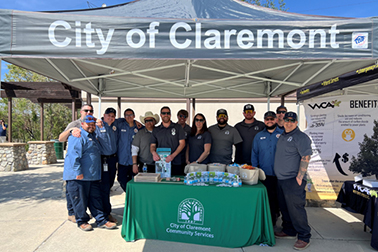
Celebrating Public Works Appreciation Week with the City of Claremont
Public Works Appreciation Week will be celebrated May 17–23, 2026, offering an opportunity to recognize the behind-the-scenes work that keeps our communities running. This year’s theme, Rooted in Service, Powered by Community, is exemplified by the City of Claremont’s Community Services team.
“Claremont’s Community Services Department plays a foundational role in keeping our city safe, accessible, and livable on a daily basis,” said Deputy City Manager Katie Wand. “Their work includes maintaining our parks, public spaces, streetscapes, and urban forest; providing sanitation services; and ensuring our infrastructure—like roads and sidewalks—is functioning properly. These efforts help prevent hazards, improve visibility and walkability, and create spaces where residents feel safe and welcome.”
During the past year, the community services department has partnered closely with the California JPIA to proactively identify hazards, improve safety, and invest in long‑term solutions that benefit the entire community. The department’s proactive and practical mindset defines its approach to risk management.
“Instead of waiting to react to incidents, Claremont consistently looks ahead—identifying potential hazards early and tackling them with thoughtful, sustainable solutions,” said California JPIA Senior Risk Manager Tony Leite. “Whether they’re assessing sidewalks throughout the community, investing in employee safety equipment, or mitigating unique site-specific risks, Claremont integrates risk management into both its daily operations and long-term planning.”
Improving Sidewalk Safety and Accessibility
In June 2025, the city utilized the Authority’s Precision Concrete Master Services Agreement to conduct a comprehensive sidewalk assessment. This effort helped identify sidewalk hazards across the community and prioritize repairs to reduce trip hazards, improve accessibility, and enhance pedestrian safety for residents of all ages and abilities.
“The assessment provided the city with a comprehensive understanding of current sidewalk conditions, which staff will use to develop the upcoming sidewalk rehabilitation program,” Wand said. “This effort was important because it enabled the city to take a data-driven approach in allocating resources efficiently and addressing the most critical repair needs.”
Investing in Employee Safety
The city also strengthened employee safety by installing a wood chipper safety system on public works equipment. This system—funded through the Authority—enhances operator protection and reduces the risk of serious injuries during routine maintenance and tree work.
“Enhancing safety features helps reduce the risk of accidents by providing built-in protections that do not rely solely on operator experience or memory,” said Wand. These improvements help ensure that even infrequent use is conducted as safely as possible, ultimately protecting employees and reducing potential liability.”
Proactive Yard Safety Improvements
Through participation in a Risk Management Evaluation Safety Assessment, the city identified potential hazards within the public works yard and implemented corrective actions to improve overall safety. When a fall protection concern was identified, the city used the Authority’s Risk Technician Program to evaluate the work activity and implement an engineering control to guard against the fall hazard, reducing risk while allowing work to continue efficiently and safely.
“The Risk Management Evaluation brought tremendous value to our operations by providing a structured, comprehensive assessment of our risk profile across departments,” Wand said. “Through the LossCAP program, the evaluation helped us move beyond a reactive approach and instead take a more proactive, data-informed approach to risk management.”
The evaluation also strengthened internal coordination, providing a roadmap for departments to align on and reinforcing a culture of shared responsibility for local safety.
Smart Risk Management in Community Projects
The Community Services Department used the Contractual Risk Transfer Manual and worked with Leite to support the donation of playground equipment during a recent playground replacement project. This ensured the transfer was handled responsibly, protecting both the city and community partners while keeping playground improvements moving forward.
“Claremont demonstrates how to creatively mitigate risk without defaulting to removal or restriction,” Leite said. “The city’s approach is a great example of how to balance safety, employee protection, and community service, while still moving projects forward efficiently and responsibly.”
A Commitment to Safety, Stewardship, and Service
For Claremont, protecting public safety doesn’t mean sacrificing community character.
“In Claremont, our defining character—walkable neighborhoods, mature trees, and active public spaces—is also part of what makes our city feel safe and welcoming,” Wand said. “Rather than viewing these priorities as competing, we work to reinforce both.”
These efforts reflect the dedication, expertise, and forward‑thinking approach of Claremont’s Community Services Department. By identifying risks early, leveraging available resources, and investing in practical solutions, they continue to enhance safety, protect public assets, and deliver high‑quality services to the community.
Print Article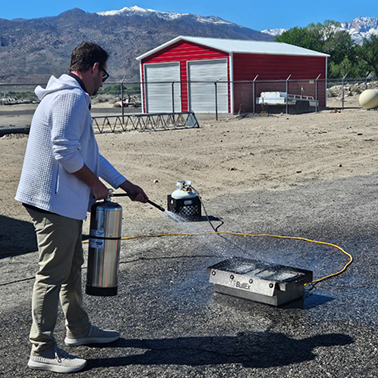
City of Bishop Hosts Fire Extinguisher Safety Training for Regional Agencies
Recently, the City of Bishop brought together employees from multiple local agencies for hands-on fire extinguisher safety training, demonstrating how collaborative approaches to workplace safety can strengthen emergency preparedness across the region. The training, conducted annually by the city for its 45 full-time employees, was opened to other California JPIA member agencies in the area to enhance the learning experience and foster regional collaboration.
Hands-on fire extinguisher training helps employees understand and discern between when it is appropriate to intervene and when evacuation is the safest option. While fires at city facilities are relatively infrequent, even small incidents can escalate quickly if employees are unsure how to respond.
“The intent isn’t to turn employees into emergency responders, but to improve awareness, confidence, and decision-making during the first moments of a fire while supporting Cal/OSHA and Injury and Illness Prevention Program requirements,” said Tony Leite, the California JPIA senior risk manager for the region.
For the City of Bishop, which operates with a volunteer fire department, having all staff receive the same safety training provides a common knowledge base during emergency response. The training familiarizes employees with different types of fire extinguishers and teaches them when and how to use them.
“Having all the staff receive the same training means we are all speaking the same language when we respond,” said City of Bishop City Clerk Robin Picken.
The training isn’t limited to hypothetical scenarios: staff complete a live fire exercise. “We all agreed that we benefited from the training, especially the hands-on operation of a fire extinguisher on a real fire,” Picken said. “It also got everyone thinking about the safety of their family at home, and how important it is to have a fire and earthquake emergency plan.”
The Authority tailors fire extinguisher trainings to reflect the environments employees work in, whether public works yards, utilities, office buildings, or parks and facilities. Content is adjusted to address the types of equipment, materials, and real-world scenarios staff are most likely to encounter. “This training reflects a proactive investment in safety and preparedness rather than a reaction to an incident,” Leite said.
Members are encouraged to explore training options with their respective risk managers. Picken coordinated the training with California JPIA contractor Amy Wehner of OC CPR Training and Maria Daniels of the California JPIA Training Department.
For the City of Bishop, the training contributes to a broader culture of safety by ensuring all employees learn important safety procedures together. “Creating a culture of safety really means getting everyone on the same page on how to respond to an emergency and then how to communicate on what went right or what could be improved,” Picken said.
The city plans to continue the training annually while also scheduling periodic refresher courses on topics such as first amendment auditor response, hazard communication, fall protection awareness, traffic control, and trench and excavation safety. Picken also encourages staff to attend the Annual Risk Management Educational Forum and take advantage of online training resources available through their myJPIA account. “Keep your staff informed, learning, and developing both personally and professionally,” Picken said. “It shows that our agency cares and is invested in not only staff safety, but also their future growth.”
Fire extinguisher training is part of a broader range of Authority resources including emergency preparedness training, CPR/AED and first aid, equipment-specific safety training, hazard communication, and risk management evaluations that help agencies address exposures beyond training alone. The Authority has also implemented updates to training software to help agencies keep employee rosters current and created online training schedules to assist in managing past, present, and future trainings.
For more information about the Authority’s full suite of risk management resources, please contact your regional risk manager, or visit the risk management services webpage.
Print Article