





Issue 175 - September 2026
NEWS: WORTHY

31st Annual Risk Management Educational Forum: Beneath the Surface—Dive Into Risk Management
The California JPIA’s 31st Annual Risk Management Educational Forum will take place October 7–9, 2026, at the Monterey Conference Center in Monterey. This year’s theme, Beneath the Surface, will explore the hidden risks, emerging exposures, and evolving challenges facing public agencies.
Like an iceberg, many public agency risks lie beneath the surface. Forum attendees will have the opportunity to gain insight into complex issues, explore evolving risks, and learn practical approaches to strengthening their organizations. Below is a preview of the thought-provoking speakers, timely topics, and special events featured at the Educational Forum.
Featured Speakers
Our opening keynote speaker is Danielle Slaton, the co-founder of Bay FC, a broadcaster, and a U.S. Women’s National Team veteran. Combining real-world insights with stories from the highest levels of elite sports, she will share compelling perspectives and lessons on reaching your full potential. Fresh off the 2026 World Cup, her remarks will offer a timely perspective on leadership, teamwork, and performing under pressure.
More people have walked on the moon than have explored the underwater caves and icebergs navigated by Jill Heinerth. In the closing session, Heinerth will draw on decades of extreme exploration to share lessons on navigating uncertainty, adapting to change, and leading teams when the stakes are highest.
Educational Sessions
Educational sessions will explore some of today’s most pressing public sector challenges. Topics include ADA accommodations and modifications, executive decisions that shape liability, AI and automation risk, deferred maintenance risks, evolving police liability, human resource decisions that become claims, and more. Led by industry experts, these sessions will offer actionable insights and practical approaches to managing risk, making informed decisions, and addressing complex public-sector challenges.
Capstone Award
The Capstone Award is presented annually to an individual who exemplifies excellence in public sector risk management. Senior Management Analyst Kate Weihe with the City of Poway has been named the 2026 Capstone Award recipient. Weihe will be recognized for her outstanding contributions to risk management and workplace safety at an awards ceremony during the Forum on Thursday, October 8.
Learn more about Weihe in the Authority’s August newsletter.
Networking Events
The opportunities to learn and connect extend well beyond the educational sessions. Throughout the Forum, attendees will have numerous opportunities to network with colleagues, exchange ideas, and build relationships, including during session breaks, the Wednesday Welcome Dinner, and the Thursday night event at the Monterey Bay Aquarium.
Visit the Authority’s Forum website page for more information.
Print Article

Workers’ Compensation Webinar—Why Are These Settlements Getting So Expensive?
The California JPIA will host its final Workers’ Compensation Webinar of the year on Thursday, November 19, at 10:00 a.m. Join us for an important discussion about the costs of workers’ compensation settlements and why they are increasing.
Jeff Rush, the Authority’s workers’ compensation program manager, and Josh Goldsmith, a partner with Siegel, Moreno & Stettler, will address “Why Are These Settlements Getting So Expensive?” Attendees will learn about the factors that contribute to the cost of workers’ comp settlements, including:
- Claims that involve an increasing number of body parts
- Some of the additional injuries being alleged by applicants’ attorneys
- Case law, such as Kite and Vigil that can rapidly increase disability ratings
Rush and Goldsmith will draw on more than 50 years of combined experience as they address these items and the strategies the Authority and its defense panel use to try to mitigate settlement costs.
We look forward to having you join us on November 19. Authority members and partners may register here for the webinar. For those unable to attend the live webinar, a recording will be available on the Authority’s website. For any questions, please contact Workers’ Compensation Program Manager Jeff Rush.
Print Article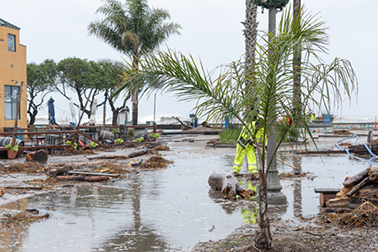
Disaster Funding Uncertainty & Resilient Recovery Planning
As federal disaster assistance enters a period of uncertainty, member agencies may need to absorb more of the cost and make critical recovery decisions sooner. The California JPIA’s virtual Risk Managers Roundtable on Tuesday, December 1, at 10:00 a.m., will bring together panelists from Cal OES, county offices of emergency management, and the California JPIA to explore what these shifts could mean for public agencies. The discussion will examine anticipated changes, including higher eligibility thresholds, a move from reimbursements toward grants or upfront payments, and increased local cost-share requirements.
This 90-minute interactive webinar, Disaster Funding Uncertainty & Resilient Recovery Planning, will connect federal policy changes to local budget impacts and practical updates to emergency plans. Participants will learn how to build greater resilience into disaster planning and budgeting, so they are better prepared to plan, fund, and manage recovery from future disasters.
What you’ll learn
- Understand how federal disaster assistance models are changing
- Review key findings from the FEMA Review Council’s May 2026 final report
- Identify public assistance programs and pre- and post-disaster grant opportunities
- Reassess planning assumptions that rely on a federal-first response
- Integrate recovery planning into emergency and budget processes
Attendees will leave with practical strategies to strengthen disaster planning, align recovery needs with budget decisions, and help their agencies respond with greater confidence when federal assistance is delayed, reduced, or delivered differently.
Prepare your agency for a changing disaster-recovery landscape. The roundtable webpage and registration will open soon.
Print Article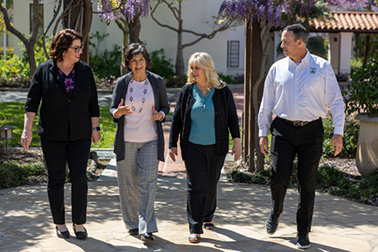
Online Version of Supervisor Essential Skills Training Program Now Available
The Supervisor Essential Skills Training Program (Online Series) is now live on myJPIA. This series is designed specifically for public sector supervisors at all levels. This self-paced, online series equips participants with practical leadership skills they can apply immediately in the workplace.
The program consists of eight online courses. Participants may begin the series at any time and complete the courses at their own pace. Participants will receive a certificate for successfully completing this training.
- DISC: Discovering the Power of We
Explore the DISC assessment to understand yourself and others, adapt to different styles, and improve collaboration and working relationships.
- Effective Communication
Strengthen your ability to communicate clearly, listen actively, and overcome barriers to connect and collaborate with your team.
- Using Emotional Intelligence
Recognize and manage emotions, understand your team, and handle challenges with confidence to lead effectively.
- Art of Conflict
Learn conflict styles and practical strategies to turn challenging situations into positive outcomes.
- Team Building to Create High-Performance Teams
Learn how to build teams with shared goals, clear norms, and accountability to achieve high-performance results.
- Managing Your Time, Priorities, and Teams
Focus on priorities, delegate effectively, and manage your time to meet goals and develop your team.
- Sustaining Successful Teams
Explore strategies to build a positive culture, support engagement, and keep your team productive and resilient over the long term.
- Performance Management
Learn to set clear expectations, give meaningful feedback, and conduct performance conversations that drive growth and results.
Registration for the Supervisor Essential Skills Training Program (Online Series) is available through myJPIA. For questions about this training, contact the Authority’s training department.
Print Article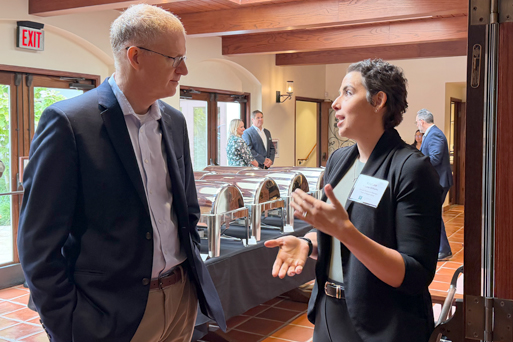
2026 Workers’ Compensation Symposium Review
The California JPIA hosted its 18th Annual Workers’ Compensation Symposium on Thursday, August 13. The event was attended by representatives from Authority member agencies, the workers’ compensation claims team at Athens Administrators, and many of the Authority’s panel attorneys. As in prior years, attendees learned about topics relevant to their agencies’ workers’ compensation programs.
Alex Mellor, the Authority’s risk services director, kicked off the event by highlighting the many risk management services available to members to prevent injuries. Attendees next heard from Giovanni Valencia, a longtime member of the Authority’s defense panel, and Adam Dombchik, an attorney who represents injured workers. They discussed the pursuit and defense of presumptive injuries with a focus on cancer, heart injuries, and complex PTSD claims. Kris Bowen, client services director with Workers’ Comp Resolutions informed members about the service her team provides when the team at Athens has trouble securing approval for claim settlements. The last panel before lunch featured Stormie Westendorf, compliance administrator with Athens Managed Care, and Elvia Rodriguez, one of the Authority’s senior claims examiners at Athens. They provided an update on the state’s recently updated utilization review regulations and their impact on medical treatment.
Following lunch, Jodene Dunphy, the human resources and risk management director for the City of Poway, and Kevin Fritzsche, the Authority’s division claims manager at Athens, informed members about how to use the results of workers’ compensation investigations in personnel matters. Employers often wait for a law enforcement agency, such as their County District Attorney, to prosecute an employee for workers’ compensation fraud, although Jodene outlined how her agency has taken action in cases involving two different city employees. The program concluded with an informative session from Gideon Baum, president of the California Workers’ Compensation Institute. He outlined some of the Institute’s recent research into cumulative trauma claims and offered thoughts on how the upcoming election could impact future workers’ compensation reform.
For members who were unable to attend the Symposium, a recording of the event is available in myJPIA. If you have any topics you would like to be considered for next year’s Symposium, please contact Jeff Rush, workers’ compensation program manager.
Print Article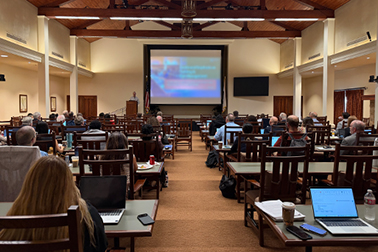
2026 Liability Attorney Summit Review
The California JPIA held its annual Liability Attorney Summit on August 11, 2026, at the Authority’s campus in La Palma. The Summit was well attended by our defense panel attorneys, Athens liability claims team, and business partners.
Chris Kustra, the Authority’s liability program manager, welcomed attendees and provided a high-level overview of the liability program’s goals, results, and strategy.
Guest speakers included traffic-engineering expert Rock Miller, appellate attorney Dan Barer, and trial consultant David Cannon.
Miller presented the first session on how to successfully defend roadway design cases from a traffic engineering standpoint. Barer provided an update and analysis on recent significant cases from the California courts and how they affect the defense of public entities. David Cannon led an “Ask a Trial Consultant” session, facilitating a lively discussion on effective trial tactics to optimize for the best results when a jury is asked to decide a case.
This year’s Summit proved once again to be a great opportunity for defense counsel and the Authority’s claims administrators to network, collaborate, and learn together. Should you have any questions about the event or this article, please contact Liability Program Manager Chris Kustra.
Print ArticleRISK SOLUTIONS
Committing to Continuous Improvement in Youth Protection
Protecting children remains one of the most critical responsibilities for public agencies managing youth services and community programs. With expanding statutes of limitations for sexual abuse claims, awareness of youth safety exposure is at an all-time high. To help member agencies establish proactive safeguards, the California JPIA partners with Praesidium, a national organization specializing in abuse prevention, to provide resources and in-depth certification programs focused on the protection of our most vulnerable populations.
Through the Authority’s Praesidium webpage, member agencies have access to model policies, screening toolkits, crisis management resources, and specialized training programs. These resources assist local entities in identifying boundary violations, preventing incidents, and fostering an organizational culture centered on child safety.
“We have to move from compliance to commitment,” said Praesidium Senior Risk Consultant James Bourgeois. “Mandated reporter training tells us what to do after something happens; prevention focuses on stopping it before it begins.”
To operationalize this commitment, the California JPIA hosted the Certified Praesidium Guardian Program, an individual professional certification in abuse risk management for organizational leaders responsible for youth and vulnerable-population programs. The program is designed to help leaders build and sustain comprehensive abuse prevention systems, maintain momentum after initial implementation, and prevent organizational practices from drifting away from established safety standards.
Certification is earned through a structured process that includes pre-work, active participation in an intensive workshop, and a knowledge assessment. To maintain the credential and encourage continued professional development, Certified Praesidium Guardians must complete 30 safety points over a three-year certification period.
- During the workshop, participants move beyond general awareness and apply prevention principles to realistic operational challenges. They examine case scenarios, practice behavior-based interviewing, identify boundary-crossing and red-flag behaviors, strengthen response planning, and develop practical steps for creating and maintaining a culture of safety. The work is organized around the eight components of the Praesidium Safety Equation: Policies
- Screening and selection
- Training
- Monitoring and supervision
- Internal feedback and systems
- Consumer participation
- Responding
- Administrative practices
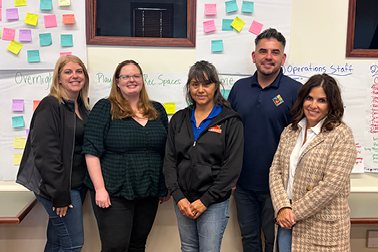
Desert Recreation District Community Services Supervisor Maureen Archuleta participated in the 2026 Certified Praesidium Guardian Program to enhance safety measures across the district’s after-school programs, which employ 125 staff members. Following the training, Archuleta immediately integrated behavioral screening practices into the district’s recruitment procedures ahead of peak seasonal hiring.
“The training equipped us to probe deeper during interviews,” said Archuleta. “When an applicant provides a general response regarding past employment issues, we now ask follow-up questions to understand the situation fully, recognize red flags for what they are, and make informed hiring decisions.”
Archuleta is also incorporating Praesidium frameworks into employee orientation and annual safety training, reinforcing that staff members must report red-flag behaviors even before a reportable incident occurs. “Staff must find the courage inside to speak up because we are advocating for some of the most vulnerable members of our community,” said Archuleta.
City of Duarte Parks and Recreation Director Manuel Enriquez also completed the 2026 Certified Praesidium Guardian Program and reflected on the holistic nature of Praesidium’s recommended abuse prevention framework. “It’s not just one component that minimizes risk,” said Enriquez. “You really do need to stay on top of all eight components of the Praesidium Safety Equation and continue working to improve each of them to maintain a safe environment. Everyone plays a role, and consistent attention across all of them is what allows our team to maintain safety.”
Following the training, Enriquez updated the city’s reference check questionnaires and added behavior-based questions to job candidate interviews. He is currently collaborating with department leadership to update the consumer code of conduct across all city facilities and programs before presenting the revised policy to the city council for formal review.
Many agencies face challenges in implementing these systems, including limited resources, staff capacity, and discomfort discussing difficult topics. However, when prevention becomes a shared priority, communities respond positively. Open communication and consistent training help remove the stigma and awkwardness often associated with discussing abuse prevention. When reflecting on an incident in Santa Monica, Volunteer Coordinator Thomas Carpenter said, “We learned that it takes time for supervisors to feel comfortable reporting what they see. Once they understood they were reporting behavior—not people—confidence grew.”
Building safer programs is a shared responsibility, but it starts with clear direction. “Prevention starts with leadership,” said Bourgeois. “When commitment comes from the top down, agencies can create a consistent, transparent culture of safety.” Preventing abuse requires more than compliance; it requires a collective commitment. By shifting from reactive compliance to proactive prevention, member agencies reduce organizational risk and create safe, supportive environments for the communities they serve.
To learn more about Praesidium resources and the Guardian Program, please contact your regional risk manager or visit the Authority’s Praesidium webpage.
Print ArticleRE: MEMBERS
California JPIA Celebrates 60th Anniversary of Big Bear City Community Services District
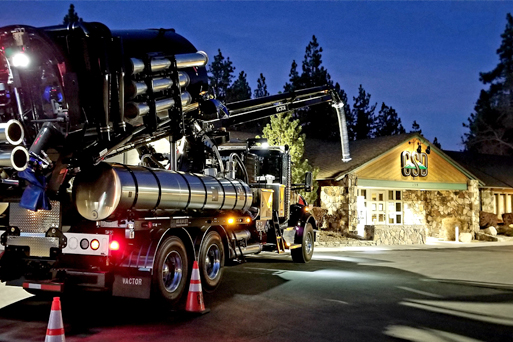
Providing reliable public services for six decades demands a sustained commitment to infrastructure planning, employee safety, and proactive risk management. The California JPIA celebrates the 60th anniversary of the Big Bear City Community Services District (BBCCSD, District), an Authority member since 2004.
BBCCSD delivers vital public services to Big Bear City, such as drinking water delivery, wastewater collection, and solid waste management. “The District has evolved, yet our core mission remains unchanged: to provide reliable public services while responsibly planning for the future,” said General Manager Glenn Jacklin. “Our partnership with the California JPIA has played an important role in that journey, helping us foster a culture of safety, continuous learning, and proactive risk management that benefits both our employees and the community members we serve.”
To maintain operational resilience across its divisions, BBCCSD works directly with Senior Risk Manager Tony Leite to tap a wide array of Authority resources. These collaborative efforts include guidance on contractual risk transfer, facility use agreements, special event risk management, public access concerns, insurance requirements, property protection, and workers’ compensation procedures.
A foundation of this partnership is the District’s recurring participation in the Loss Control Action Plan (LossCAP) Risk Management Evaluation process. BBCCSD completed LossCAP evaluations in 2009, 2013, 2019, and most recently in 2026. The latest evaluation provided a practical roadmap to further strengthen records management, Americans with Disabilities Act compliance, occupational safety, human resources, facilities management, and information technology across all administrative and field operations.
This dedication to operational safety earned the District peer recognition. In 2026, BBCCSD received the California JPIA Risk Management Award for Best Overall Performance in the Workers’ Compensation Program among non-municipal agencies. Award recipients are evaluated on claims performance, responsiveness to LossCAP recommendations, participation in risk management programs, and engagement in training opportunities.
“From my perspective as their regional risk manager at the Authority, BBCCSD has been highly engaged with California JPIA programs and resources over the years,” said Leite. “Overall, the District has demonstrated a strong commitment to proactive risk management and continuous improvement.”
In addition to operational reviews, District staff regularly participate in California JPIA training programs covering workplace safety, cybersecurity awareness, and emergency preparedness. Executive leadership has also taken advantage of targeted professional development programs. Jacklin completed the Risk Management Academy, Leadership Academy, and Executive Academy to help guide organizational strategy.
“The Authority offers exceptional leadership development opportunities,” said Jacklin. “For us, the California JPIA is much more than an insurance provider. They are a trusted partner that helps us build a stronger, safer, and more resilient organization.”
As BBCCSD enters its seventh decade, the Authority’s LossCAP evaluation will continue to guide the District’s priorities, which include critical water and wastewater asset upgrades, technology enhancements, long-term financial sustainability, and staff support. “Just as important as investing in infrastructure is investing in the people who operate and maintain it,” said Jacklin. “Our employees are our greatest asset, and one of our ongoing goals is to provide them with the training, tools, and professional development opportunities they need to work safely, advance their careers, and continue delivering exceptional service to the community. An organization is only as strong as its people, and we are committed to supporting them every step of the way.”
The California JPIA congratulates the Big Bear City Community Services District on 60 years of service and looks forward to continuing its partnership to support the Big Bear City community!
Print ArticleLEGAL MATTERS

Liability Reform Efforts Gain Momentum as Local Governments Push for Change
Over the past decade, liability claim costs for California public agencies have climbed dramatically. The California Association of Joint Powers Authorities recently published one of the largest studies ever conducted on local government liability in the state. The Protecting Public Funds Data Project collected and analyzed claims data from more than 1,900 cities, counties, schools, and special districts.
The study showed that annual claim costs rose from $392 million in 2018 to $1.2 billion in 2025 and are projected to reach $2.1 billion by 2028. As high as these figures are, they understate the scope of the problem because many large, self-insured jurisdictions did not participate in the study. The analysis also documented sharp increases in high-severity claims and insurance premiums. These findings were presented by a panel of public-sector leaders at the League of California Cities Annual Conference in September.
The panel also highlighted The Cost of Claims: What It Means for California’s Communities, an academic study published by the Pepperdine School of Public Policy and Beacon Economics. It found that liability costs are outpacing inflation, driven largely by the rise in high-severity claims. Claims exceeding $1 million now account for 70 percent of total claim costs, up from 37 percent in 2011. And because large claims take longer to resolve, liabilities are staying on public agency balance sheets longer. Old claims linger, while new claims continue to pile up.
For local officials and management teams, the consequences reach well beyond insurance and litigation. As claim payments, self-insured retentions, and insurance premiums absorb a growing share of public resources, cities face difficult funding choices—and community services are often the first to feel the pinch. Research suggests that these pressures will not ease unless policymakers take on major local government liability reform.
Proportionate Liability Is Needed
One driver of runaway liability costs is the unfair way California’s joint-and-several liability rule treats local governments. In cases with multiple defendants, any one of them can be required to pay the plaintiff’s full economic damages, including past and future medical expenses, lost wages, and property damage—even when its share of fault is minimal. This invites “deep pocket” targeting, which is why so many local governments are named in lawsuits for harm primarily caused by a third party.
The result is that taxpayers cover costs far beyond the public agency’s actual share of fault. The broader social and public policy question is this: Should a city be forced to pay for every tragic accident that occurs on public property, simply because the other parties who are primarily responsible cannot pay? This problem arises often in catastrophic injury cases involving uninsured or underinsured drivers who cause vehicle accidents. Concerns such as these helped to put local government liability reform on Sacramento’s agenda in 2025 and 2026.
Senate Bill 577 and the Need for Broader Reform
The most notable development in 2026 related to local government liability reform was Senate Bill 577 (SB 577). The bill primarily addressed childhood sexual assault claims against public entities, with provisions for heightened evidentiary standards under certain conditions, prevention measures, oversight rules, and penalties for attorneys who bring claims in bad faith. Notably, however, the bill also amended Civil Code Section 1431.2 in a way that directly benefits California JPIA members and all public entities.
Under the revised code, in civil actions filed on or after January 1, 2027, a public entity found 15 percent or less at fault will pay only its proportionate share of economic damages. If the public entity is found to be more than 15 percent at fault, joint-and-several liability will continue to apply. The Governor signed the bill into law on September 30, 2026.
This is not a comprehensive solution, but it is incremental progress: a small step toward aligning financial responsibility with each defendant’s actual share of fault. Because the new rule applies only when a public entity is found 15 percent or less at fault, its effect on overall liability costs will be limited. Still, it is an important acknowledgment by the Legislature and the Governor that these reforms are both timely and necessary.
This first step toward proportionate liability for economic damages was made possible by growing collaboration among local governments, risk-sharing pools, and municipal associations. Together, we are showing policymakers how escalating liability costs divert limited funds away from community services that residents rely on. The Coalition to Protect Community Services—led by the California JPIA—was instrumental in moving this conversation forward in 2026. To all who participated, thank you for supporting the Coalition’s efforts and for allowing us to use your agency logos on our correspondence with the Capitol. It truly helped to amplify our impact.
Looking Ahead
SB 577 marks modest progress, but the conversation about public entity tort reform is far from over. The Pepperdine and Beacon Economics study offers data-supported reform recommendations that will be brought before policymakers in 2027: (1) adopting modified comparative negligence standards, (2) developing liability guardrails around dangerous-condition-of-public-property claims, (3) strengthening design immunity, (4) establishing a higher level of proportionate liability, (5) revising the collateral source rule, and (6) instituting structured damage caps. Together, these reforms would protect taxpayer funds for broad community benefit, while still fairly compensating people who are legitimately harmed by local government negligence. The two goals are not mutually exclusive; balanced, thoughtful reforms can achieve both.
For city leaders who discuss these issues with state legislators and officials, the central challenge is balancing fair compensation for injured parties with the need to preserve public resources for their intended purpose. This is not merely a conversation about insurance, litigation, or legal nuance. It is fundamentally about protecting community services. Residents depend on local governments for roads, libraries, senior centers, parks, public transportation, and public safety. Every dollar spent on liability claims is a dollar that never reaches residents. Public entity tort reform should be an urgent priority for the California Legislature in 2027. And the Coalition to Protect Community Services will be in the room, advocating on behalf of local governments.
Print Article