

Issue 170 - April 2026
RE: MEMBERS
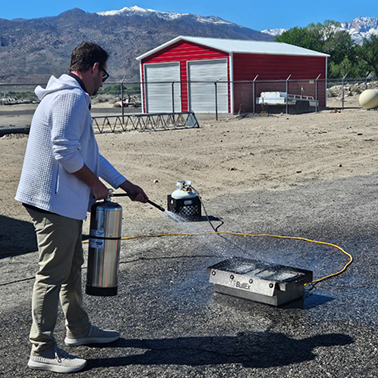
City of Bishop Hosts Fire Extinguisher Safety Training for Regional Agencies
Hands-on fire extinguisher training helps employees understand and discern between when it is appropriate to intervene and when evacuation is the safest option. While fires at city facilities are relatively infrequent, even small incidents can escalate quickly if employees are unsure how to respond.
“The intent isn’t to turn employees into emergency responders, but to improve awareness, confidence, and decision-making during the first moments of a fire while supporting Cal/OSHA and Injury and Illness Prevention Program requirements,” said Tony Leite, the California JPIA senior risk manager for the region.
For the City of Bishop, which operates with a volunteer fire department, having all staff receive the same safety training provides a common knowledge base during emergency response. The training familiarizes employees with different types of fire extinguishers and teaches them when and how to use them.
“Having all the staff receive the same training means we are all speaking the same language when we respond,” said City of Bishop City Clerk Robin Picken.
The training isn’t limited to hypothetical scenarios: staff complete a live fire exercise. “We all agreed that we benefited from the training, especially the hands-on operation of a fire extinguisher on a real fire,” Picken said. “It also got everyone thinking about the safety of their family at home, and how important it is to have a fire and earthquake emergency plan.”
The Authority tailors fire extinguisher trainings to reflect the environments employees work in, whether public works yards, utilities, office buildings, or parks and facilities. Content is adjusted to address the types of equipment, materials, and real-world scenarios staff are most likely to encounter. “This training reflects a proactive investment in safety and preparedness rather than a reaction to an incident,” Leite said.
Members are encouraged to explore training options with their respective risk managers. Picken coordinated the training with California JPIA contractor Amy Wehner of OC CPR Training and Maria Daniels of the California JPIA Training Department.
For the City of Bishop, the training contributes to a broader culture of safety by ensuring all employees learn important safety procedures together. “Creating a culture of safety really means getting everyone on the same page on how to respond to an emergency and then how to communicate on what went right or what could be improved,” Picken said.
The city plans to continue the training annually while also scheduling periodic refresher courses on topics such as first amendment auditor response, hazard communication, fall protection awareness, traffic control, and trench and excavation safety. Picken also encourages staff to attend the Annual Risk Management Educational Forum and take advantage of online training resources available through their myJPIA account. “Keep your staff informed, learning, and developing both personally and professionally,” Picken said. “It shows that our agency cares and is invested in not only staff safety, but also their future growth.”
Fire extinguisher training is part of a broader range of Authority resources including emergency preparedness training, CPR/AED and first aid, equipment-specific safety training, hazard communication, and risk management evaluations that help agencies address exposures beyond training alone. The Authority has also implemented updates to training software to help agencies keep employee rosters current and created online training schedules to assist in managing past, present, and future trainings.
For more information about the Authority’s full suite of risk management resources, please contact your regional risk manager, or visit the risk management services webpage.
< Back to Full Issue Print Article