

Issue 173 - July 2026
NEWS: WORTHY
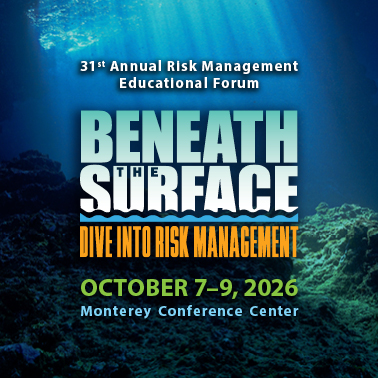
Featured Sessions at the 2026 Forum
Some sessions that may be of particular interest to members are:
No One at the Helm: AI and Automation Risk
Many technology failures stem from unclear ownership, weak oversight, and lack of auditability—not bad intent. This session examines AI, automation, and digital tools through a risk lens, focusing on governance structures, accountability, bias risk, and documentation before problems surface. Speakers will examine technology failures through the lens of governance and accountability, highlighting moments when ownership, oversight, or documentation was unclear and how those gaps later surfaced as risks, compliance issues, or reputational problems.
Anchor Lines: When Risk Transfer Gets Tested
Joint use, facility use, parking, and similar access agreements are common across public agencies, whether coordinating shared use of school fields, partnering on recreational programs, or managing third-party activities on public property. While these agreements are often processed as routine, they directly affect how liability is allocated in the event of an incident. This session focuses on how contractual risk transfer provisions perform in real-world public agency claims scenarios. This interactive session will highlight where agreements succeed and where gaps create unintended exposure.
Surge Conditions: Workers’ Compensation During Disasters
Disasters create a surge in complex workers’ compensation claims from respiratory exposure and heat illness to fatigue-related injuries and rising mental health impacts that can significantly strain public entity resources. This session explores key risk drivers, critical coverage questions, and practical strategies to manage claims, protect employees, and control long-term costs during and after disaster response.
Sea-Level Surveillance: Where Drone Programs Get Tested
After adopting a drone program, attention should be given to Fourth Amendment considerations, Federal Aviation Administration (FAA) compliance, departmental use limitations, supervision, and training requirements, documentation, retention, and use of drone footage. Using real-world scenarios, the session illustrates how lawful drone operations can still create civil liability, evidentiary problems, or public trust issues when policy, practice, and oversight fall out of alignment.
Visit the Risk Management Educational Forum webpage for more information or to register. If you have any questions, please email us.
< Back to Full Issue Print Article