





Issue 176 - October 2026
NEWS: WORTHY
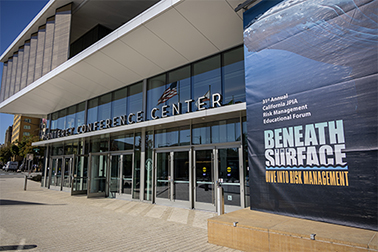
Authority Members Dive Beneath the Surface for the 31st Annual Risk Management Educational Forum
Members, business partners, and staff gathered in Monterey from October 6 to 9, 2026, for the California JPIA’s 31st Annual Risk Management Educational Forum. Themed Beneath the Surface—Dive Into Risk Management, the event challenged attendees to look beyond everyday operations and explore emerging risks and strategies shaping the future of public-sector risk management.
The Forum opened with a presentation by Stephanie Veniez, associate at Best Best & Krieger LLP, and Tim Mahoney, general manager of Disability Access Consultants, who explored how public agencies can effectively and consistently respond to Americans with Disabilities Act (ADA) reasonable accommodation and modification requests while managing risk and maintaining compliance.
The second session featured a panel discussion examining how risk exposure can emerge from executive-level decisions and priorities. Michelle Bender, city manager of San Marcos; Ken Domer, city manager of La Verne; and Jorge Garcia, city manager of Pismo Beach, shared insights on how budget decisions, policy approvals, organizational culture, and communication practices can influence liability. Drawing from real-world examples, the panelists discussed situations in which executive actions were later scrutinized through litigation, investigations, or public controversy, and reflected on lessons that became apparent only in hindsight.
Thursday’s programming began with the presentation of the 13th Annual Capstone Award to Kate Weihe of the City of Poway. The award recognizes a member agency employee who demonstrates an outstanding commitment to risk management.
The morning keynote featured Danielle Slaton, co-owner of Bay FC and a silver medalist in women’s soccer at the 2000 Olympic Games, who shared insights on leadership, trust, and creating a culture that enables teams to succeed. Her message emphasized the value of understanding individual strengths, supporting one another, and rising to the occasion when performance matters most.
Members then participated in breakout sessions covering a wide range of issues impacting public agencies today, including legal liability, cybersecurity, AI and automation risk, deferred maintenance, evolving police liability, and risk transfer.
The Forum concluded on Friday with a multimedia closing session from underwater explorer Jill Heinerth, who shared hard-earned lessons from decades of extreme exploration and filmmaking about how to succeed when the path ahead is unclear. Through gripping stories and practical insights, Heinerth explored how to assess risk, stay calm under pressure, learn from setbacks, and build trust when stakes are high. The event concluded with the always-popular liability case law update presented by the Authority’s liability panel attorneys.
Authority members are encouraged to save the date for the 32nd Annual California JPIA Risk Management Educational Forum, being held October 13–15, 2027, at the JW Marriott in Palm Desert.
Print Article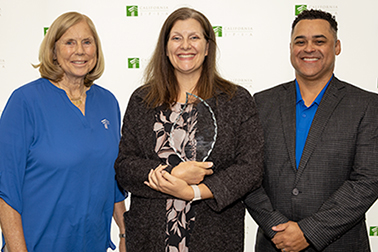
Tips from Capstone Winner Kate Weihe for Building a Successful Risk Management Program
When the City of Poway’s Senior Management Analyst Kate Weihe received the 2026 Capstone Award at the 31st Annual Risk Management Educational Forum, it was in recognition of her work to modernize and strengthen the city’s risk management strategy. Her efforts demonstrated how a thoughtful, relationship-driven approach can help agencies address risks, improve workplace safety, and create lasting organizational change. For risk management professionals looking to elevate their own programs, Weihe offered the following advice.
One of the most important steps is to prioritize. Rather than trying to tackle every issue at once, Weihe recommends identifying all the issues, both your most urgent challenges and your easiest opportunities for improvement.
“Identify your biggest fires and maybe some low-hanging fruit,” Weihe said. “Don’t focus on everything all at the same time, as it can feel overwhelming. Find something that is easy to work with and something that needs to be addressed immediately and take care of those things first.”
Weihe also emphasized that successful risk management depends on strong relationships throughout the organization. Building trust encourages open conversations about vulnerabilities and challenges, making it easier to address risks before they become larger problems.
“To be truly successful in risk management, you have to foster relationships across the organization,” she said. “It’s easy to come across as a finger pointer if you don’t have those relationships and if you don’t encourage open and honest discussion about where your vulnerabilities lie. The more you can foster these relationships, the more successful you will be.”
A proactive mindset is also important. For example, when preparing for a Cal/OSHA inspection, Weihe views these inspections not as something to fear, but as valuable opportunities to uncover risks and strengthen workplace safety.
“Make sure that you document everything and approach the inspection as an opportunity to learn,” she said. “There are all sorts of safety concerns that may go unnoticed, and a trained professional through OSHA may be able to help you identify those risks before they become a problem.”
From setting priorities to building partnerships and embracing continuous improvement, Weihe’s advice reflects the practical, people-focused approach that helped earn her this year’s Capstone Award.
Visit the Authority’s Capstone Awards page to learn more about this award and view past winners.
Print Article
Preparing for a Wet Winter: What a Strong El Niño Means for Your Agency
The National Weather Service Climate Prediction Center projects a greater than 90 percent chance of a very strong El Niño during the 2026-27 fall and winter. While a strong El Niño season is not guaranteed, the California JPIA encourages members to take proactive steps to prepare.
In recognition of this, the Authority recently recorded a webinar with Bethany Ring, a partner with Graves & King LLP, and one of the Authority’s liability defense attorneys. In addition to her litigation practice, Bethany has spent 17 years as a scientific expert in civil engineering and environmental science matters, including floodplain hydraulics and rainfall analysis. Members are encouraged to view the on-demand webinar and share it with public works, emergency management, and maintenance staff.
Significant weather events can generate both property and liability losses. While preparation helps prevent and reduce property losses, it has the greatest impact on liability, since these losses are largely determined by what the agency knew, whether the agency adequately inspected and maintained its property, and whether it documented these activities. Preparation helps agencies limit liability exposure, reduce costs, and better defend against claims.
Before the Storm: Agency Preparation
- Clean and maintain all storm drains, culverts, catch basins, and channel systems.
- Identify known problem areas and stage resources (equipment, materials, etc.) near those areas. Use institutional knowledge from long-tenured maintenance staff who often know exactly where water collects and where trees tend to fall.
- Self-evaluate. What issues are unique to your agency? What issues could arise in neighboring jurisdictions that could affect you, such as upstream flows or shared roadways?
- Account for recent disasters. Burn scars from recent wildfires significantly increase the risk of debris flows and mudslides.
- Execute mutual aid and shared resource agreements now, rather than in the middle of an event.
- Review your Emergency Operations Plan (EOP) with all departments, including police and fire. Confirm the plan for losing cell service, internet, or 911; when and how the Emergency Operations Center (EOC) will be activated; and test local emergency notification systems.
Before the Storm: Communicating with Residents
Members are also encouraged to prepare residents using a variety of channels such as social media, flyers, emails, utility bill inserts, and emergency broadcast systems. Key messages include:
- Sandbag locations and availability.
- Moving water reminders (“Turn around, don’t drown”), including how little fast-moving water it takes to sweep away a person or vehicle.
- Staying away from downed electrical lines.
- Stocking up on supplies before a storm arrives.
- Emergency contacts and alternate means of communication.
During the Storm
- Conduct storm patrols and watch known problem areas closely.
- Have extra personnel on call, and know in advance where additional supplies and equipment can be obtained if needed.
- Establish departmental central commands and maintain constant communication with police, fire, and the EOC.
- Avoid overextending or over-committing resources and personnel.
- Be prepared to pivot quickly when unexpected problems arise.
- Understand how and why to declare a local emergency, which can be critical to accessing state and federal disaster assistance.
Documentation
Documentation is often a public agency’s best defense when a storm-related claim is filed, sometimes months or years after the event.
- How: Photos with dates and locations, notes, or documentation in a computer system are all acceptable. The best method is the one staff will actually use.
- During the event: Record communications among departments and use forms, spreadsheets, or logs that are in place before the storm arrives.
- After the event: Complete documentation as soon as possible. Reflective notes written after the fact are acceptable if contemporaneous notes were not possible, but the sooner the better.
- Train staff: Training on documentation protocols makes the practice second nature. Consider what level of documentation makes sense for each level of employee, from field crews to department heads.
Inspection, maintenance, and cleaning records created before the season are just as important as storm-day records. They demonstrate that the agency took reasonable steps to maintain its property.
Engineering Considerations
Where temporary measures, such as barriers, diversions, or road protections, will be in place for more than a few days or beyond a single storm event, members should have a signed and stamped plan prepared by a licensed engineer. This documents that the measure reflects professional engineering judgment rather than an ad hoc field decision.
Preparing for winter weather is good practice every year, but it is especially important in a projected strong El Niño season. Members are encouraged to review their storm preparations now and document every step along the way.
If you have questions, please contact your regional risk manager.
Print Article
Expanded Cybersecurity Resources Available to Members
Following a successful partnership with Triden Group and strong member participation in the California JPIA’s cybersecurity assessment services, the Authority is expanding its cybersecurity resources for members. As October marks National Cybersecurity Awareness Month, the initiative highlights the Authority’s ongoing commitment to helping members strengthen their cyber resilience and preparedness.
Cybersecurity assessments have helped members identify practical areas for improvement, including patch management, incident response planning, vulnerability management, backup practices, and employee security awareness. Several members have also used their assessment results to pursue follow-up work, including advisory support, tabletop exercises, penetration testing, network upgrades, managed detection and response, backup improvements, employee security awareness training, and IT governance support. These findings reinforced the value of regular assessments and hands-on exercises that allow agency staff to walk through how they would respond during a cybersecurity incident.
Members now have access to fully funded cybersecurity tabletop exercises, facilitated by Triden Group. These exercises are designed to help agencies test their response procedures, clarify roles and responsibilities, identify communication gaps, and practice decision-making before an actual cybersecurity incident occurs. Tabletop exercises may be conducted at the executive or technical level, depending on the member’s needs.
The Authority will also make follow-up cybersecurity reassessments available every three years for members who have addressed prior assessment findings. These reassessments will help members evaluate progress, identify remaining vulnerabilities, and determine where additional work may be needed.
Members may continue to access fully funded cybersecurity assessment services, including a National Institute of Standards and Technology (NIST) questionnaire and internal and external vulnerability assessments.
To provide additional flexibility, members may also choose to use another qualified cybersecurity vendor for a comprehensive assessment or tabletop exercise. In those cases, the Authority will reimburse the member up to the amount the Authority would otherwise pay for the same service through Triden Group. Any cost above that amount will remain the member’s responsibility.
These expanded resources complement the Authority’s existing cybersecurity tools, including KnowBe4 for security awareness training and phishing simulations, Eagle Eye for cyber risk management, and eRiskHub, an online portal with cybersecurity resources and incident response planning tools.
For more information or to access these services, members should contact their regional risk manager.
Print ArticleRE: MEMBERS

National Code Enforcement Officer Appreciation Month
Cities and counties nationwide proclaim October as National Code Enforcement Officer Appreciation Month to celebrate the work code enforcement officials provide in our communities.
Since January 2023, the Authority has partnered with the Code Enforcement Officer Safety Foundation (CEOSF), a national 501c3 nonprofit, to provide specialized training for code officials and Senate Bill 296 compliance. The training serves professionals in code enforcement, building safety, fire prevention, animal control, park rangers, and community service officers, who regulate local and state health and safety codes.
In carrying out their duties, these professionals may encounter individuals experiencing mental illness, emotional distress, homelessness, substance abuse, or financial hardship, creating situations that can quickly escalate. CEOSF tracks these incidents nationwide involving threats, stalking, assaults, and even fatalities affecting code officials. It is work supported by organizations including the California Fire Prevention Officers Association, California Association of Code Enforcement Officers, CalAnimals, and the International Code Council.
CEOSF online trainings are available to California JPIA members. Job-specific courses include the Code Official Safety Specialist, Advanced Operational Awareness, High-Risk Case Management, First Amendment Auditors, and Risk Management for Code Enforcement. The newest class, Advanced Operational Awareness (COSS-AOA), is a national certification in officer safety for Code Enforcement and was just recently released. This 8-hour online class provides a deeper understanding of situational awareness and officer safety and includes 14 modules and a 291-page workbook. Members may email CEOSF to register.
Code enforcement officers uphold health and safety codes, offer exceptional customer service, and work closely with the public to achieve compliance. They are creative problem-solvers and dedicated public servants.
Thank you for all you do, Code Enforcement Officers!
Print Article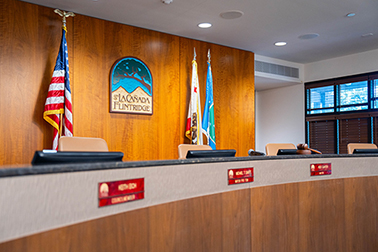
California JPIA Celebrates 50th Anniversary of La Cañada Flintridge
As the city of La Cañada Flintridge marks its 50th anniversary of incorporation, it also celebrates 40 years of partnership with the California JPIA. Since joining the pool in 1986, the city has worked alongside the Authority to protect public assets, strengthen emergency response protocols, and embed risk management into daily municipal operations.
Reflecting on the 50-year milestone, City Manager Dr. Daniel Jordan emphasized how shared organizational values have guided the city’s progress over the decades. “Our 50th anniversary provides an opportunity to reflect on the traditions, spirit, and innovation that define La Cañada Flintridge,” said Jordan. “For four decades, our partnership with the California JPIA has been vital to safeguarding our community. By helping us manage risk, and prepare for future challenges, the Authority allows us to stay focused on delivering high-quality services to our community.”
La Cañada Flintridge has proven to be an exceptional partner. In 2021, the California JPIA recognized Assistant City Manager Arabo Parseghian with the Capstone Award for his leadership in coordinating the city’s Americans with Disabilities Act self-evaluation and transition plan, developing a real-time curb-ramp inventory application, evaluating emergency preparedness programs, and managing information technology and cybersecurity risks.
Parseghian noted that collaborating with the California JPIA has helped the city cultivate an active risk management culture across all departments. “The California JPIA has been an important risk management partner to La Cañada Flintridge,” said Parseghian. “Specific collaborative efforts have included a cybersecurity assessment, Americans with Disabilities Act compliance initiatives, and enhancements to the city’s special event risk mitigation practices. These efforts have helped the city establish a proactive risk management culture focused on identifying and addressing potential exposures before they result in losses.”
As La Cañada Flintridge enters its next decade, disaster preparedness and infrastructure resilience remain top operational priorities. Following the Eaton Fire, the city began updatingits Emergency Operations Plan, as well as enhancing its comprehensive evacuation planning. As part of the process, staff also began to strengthen Emergency Operations Center response capabilities, and expand public warning systems. These emergency management initiatives, along with ongoing investments in streets, public infrastructure, parks, and vegetation management, help ensure operational continuity during natural disasters.
From community traditions such as Fiesta Days, Music in the Park, the Mayor’s Hike, and Community Preparedness Day, to its extensive trail network and many local partnerships, La Cañada Flintridge remains anchored by its adopted core values of Integrity, Stewardship, Service, and Community. “As La Cañada Flintridge begins its next 50 years, the city is focused on preserving its small-town character while preparing for the community’s changing needs,” said Parseghian. “Several of the city’s priorities directly address risk management, ensuring that emergency readiness, cybersecurity, infrastructure maintenance, employee safety, and contractual risk transfer remain ongoing organizational responsibilities.”
The California JPIA congratulates La Cañada Flintridge on its 50th anniversary of incorporation and 40th anniversary of dedicated partnership.
Print Article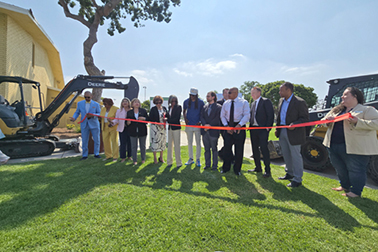
California JPIA Celebrates 30th Anniversary of Gateway Cities Council of Governments
Serving 27 cities, 11 unincorporated communities, and over two million residents across southeast Los Angeles County, the Gateway Cities Council of Governments (Gateway Cities or COG) represents more than five percent of California’s population. If consolidated as a single municipality, the subregion would rank as the fifth-largest city in the United States. As Gateway Cities celebrates its 30th anniversary, its decade-long partnership with the California JPIA continues to support regional collaboration, workforce training, and administrative resilience.
Gateway Cities focuses on regional transportation, housing and homelessness, environmental policy, economic development, and health and wellness. Executive Director Hector De La Torre emphasized how regional cooperation allows local governments to deliver essential services without overextending municipal resources. “The mission of the Gateway Cities Council of Governments is very simple: to improve the quality of life of our residents,” he said. “We achieve this through collaboration with our city leadership: both councilmembers and city managers. Our collaboration brings resources into the community without stressing their organizations, while continuing our direct support for our cities.”
Gateway Cities joined the California JPIA in 1998 as part of the primary liability and workers’ compensation programs. As an administrative body that leases office facilities, Gateway Cities’ direct risk exposure differs from traditional municipal entities. Therefore, their collaboration with Authority staff focuses on workplace safety, employment practices, and employee training.
Additionally, with approximately half of the 27 member cities participating in the California JPIA pool, Gateway Cities serves as a vital forum for addressing broader municipal liability issues.
“As more of an administrative body, the COG does not have the same municipal exposures as most of the Authority’s members,” said De La Torre. “That said, we still are very engaged, especially as it relates to training. We are very attuned to the issues of municipal liability and how they impact our cities’ ability to deliver services to their constituents.”
This regional perspective was demonstrated during municipal discussions surrounding tort reform and Senate Bill 577. “Gateway Cities did not take a position on the bill,” said De La Torre. “However, we were certainly a forum where our cities could talk about and share the impacts that joint and several liability has on cities’ budgets, and ultimately, their ability to keep our communities safe and prosperous.”
As Gateway Cities enters its fourth decade, the organization is expanding regional programs that directly support residents, including energy efficiency, shelter assistance, legal support, workforce training, and public health initiatives.
The COG is also overseeing the largest capital initiative in its history: a $104 million fiber optic network connecting 24 city halls to California’s middle-mile infrastructure. Scheduled for completion in early 2027, the project will provide high-speed connectivity and dual-directional redundancy for municipal operations. “We bring the resources, and our cities decide how to best use them to benefit residents,” said De La Torre.
The California JPIA congratulates Gateway Cities on 30 years of dedicated service to southeast Los Angeles County and its member communities.
Print ArticlePRO: FILES

California JPIA Celebrates Habib Ali’s 10th Anniversary
Financial decisions that support the California JPIA pool are often made behind the scenes, yet they help shape the programs, services, and long-term stability that benefit member agencies. Behind those daily financial operations is Accountant Habib Ali, who celebrates his 10th anniversary with the California JPIA in October 2026. From processing accounts payable during the pandemic to helping develop multi-year organizational budgets, Ali ensures that the Authority’s financial operations run smoothly, supporting member communities.
After earning a degree in business administration with a concentration in finance, real estate, and law from California State Polytechnic University, Pomona, Ali worked in accounting for the City of Artesia before joining the California JPIA in 2016 as an accounting specialist.
He was promoted to accountant in October 2024, and continues to find joy in his work. “The most rewarding part of my job is knowing that the work we do helps our members better serve their communities,” said Ali. “While accounting often happens behind the scenes, it plays a role in nearly every decision an organization makes. After processing thousands of invoices over the past decade, I have developed a deeper appreciation for the work happening on the ground and the ways the Authority supports its members.”
Throughout his decade with the Authority, Ali has contributed to significant operational improvements. During the COVID-19 pandemic, he maintained the accounts payable systems to ensure continuous financial operations. He later helped evaluate, prepare, and implement the Sage Intacct accounting system to enhance department workflows.
Following his promotion to accountant, his role expanded to include generating annual contribution and property invoices for members and assisting in the development of the 2026-27 and 2027-28 budgets. “The budgeting process allowed me to meet with every department, learn about their goals and operational needs, and better understand how each team contributes to serving our members,” said Ali. “It provided a unique perspective on the organization as a whole and reinforced how interconnected our work is.”
Ali’s commitment to public service extends beyond his daily responsibilities. Inspired by his upbringing and his father’s career in government service, Ali served as co-chair of the City of Cerritos Community Safety Committee from October 2023 to January 2025, advising the city on crime prevention, traffic, and pedestrian safety. Within the Authority, he has also fostered camaraderie among colleagues and member agencies by organizing digital scavenger hunts during the Risk Management Educational Forum in 2018 and 2022.
Finance Director Jason McBride praised Ali’s dedication and positive influence on the team. “Habib brings incredible energy to our team, combined with genuine enthusiasm for taking on new challenges and applying his financial expertise,” said Finance Director Jason McBride. “His collaborative approach has made him a vital partner to every team he works with, and the collegiality and warmth he brings to the office truly enrich our organizational culture.”
Reflecting on his decade with the California JPIA, Ali attributes his professional growth to a supportive work environment and a willingness to adapt. “Looking back, what stands out most are the relationships I have built, the challenges we have overcome, and the opportunities I have been given,” said Ali. “I would like to thank the leadership team and my immediate supervisor, Jason, for believing in me and providing me with the opportunities to thrive at the Authority. Having that support makes coming into work a joy.”
The California JPIA congratulates Habib Ali on his 10th anniversary and thanks him for ten years of dedicated service to the organization and its membership.
Print ArticleLEGAL MATTERS

AI at Work: California’s New Workplace Technology Rules for Public Agency Employers
By Kelly Tuffo, Senior Counsel
Originally published on October 6, 2026. Reprinted with permission from Leibert Cassidy Whitmore. All rights reserved.
Artificial intelligence (“AI”) and other emerging technologies are rapidly changing the workplace—and California lawmakers have responded. In 2026, Governor Newsom signed several significant bills regulating AI-assisted employment decisions and workplace surveillance, while vetoing another that would have imposed new AI-related notice requirements on public agencies.
For California public agencies, these new laws establish important limits on how automated systems may be used in employment decisions, where employees may be monitored, and what information AI-powered tools may collect or determine about employees.
Senate Bill (“SB”) 947: A Human Must Remain in the Loop
SB 947—referred to during the legislative process as the “No Robo Bosses Act”—regulates employers’ use of automated decision systems (“ADS”) in employment decisions. The law becomes operative July 1, 2027, and expressly applies to public employers.
An ADS generally includes a computational process derived from machine learning, statistical modeling, data analytics, or AI that produces a score, classification, recommendation, or other simplified output used to assist or replace human discretionary decision-making and that materially impacts individuals. Ordinary tools such as calculators, databases, antivirus software, firewalls, and identity and access-management tools are excluded.
SB 947 prohibits employers from using an ADS to violate or prevent compliance with labor, employment, occupational safety, or civil rights laws; determine an employee’s protected status under the Fair Employment and Housing Act; or predict and take adverse action against a worker for exercising legal rights.
Most significantly, an employer may not rely solely on an ADS when making a disciplinary or termination decision.
If an employer primarily relies on an ADS output, a human reviewer must corroborate the decision using relevant information, such as supervisory evaluations, personnel records, employee work product, peer reviews, or witness interviews. If the output cannot be corroborated, or the reviewer determines it is inaccurate, incomplete, or misleading, the employer may not use it to make the decision.
The law also requires a separate written notice when an employer primarily relies on an ADS in making a disciplinary or termination decision. Among other things, the notice must disclose that an ADS was primarily relied upon and human-reviewed, provide a means to contact a human for additional information, and inform the employee of the right to obtain a meaningful description of the employee’s data used by the system.
To ensure compliance and sound personnel practices, public agencies should not treat automated performance scores, attendance analytics, productivity systems, and similar technologies as substitutes for an appropriate disciplinary investigation. Agencies relying substantially on technology-generated findings should establish procedures documenting the human review, the information considered, and how the reviewer independently corroborated the result.
SB 947 also permits its requirements to be expressly waived through a collective bargaining agreement, but only if the agreement clearly and unambiguously waives the statute, addresses wages or earnings and other working conditions, and provides protection from algorithmic management.
Violations may be enforced by the Labor Commissioner or public prosecutors and are subject to a civil penalty of $500 per violation.
Assembly Bill (“AB”) 1883: New Limits on AI-Powered Workplace Surveillance
AB 1883 regulates certain uses of workplace surveillance technology. It takes effect January 1, 2027, and expressly applies to public employers, including charter cities.
The law broadly defines a “workplace surveillance tool” as a system, application, instrument, or device that collects or facilitates the collection of employee data, activities, communications, actions, biometrics, or behaviors by means other than direct human observation. Examples include video and audio surveillance, continuous time tracking, geolocation, electromagnetic tracking, and photoelectronic tracking.
AB 1883 targets two specific uses of AI. Employers may not use a workplace surveillance tool that uses AI to:
- recognize, infer, or predict an employee’s emotional state; or
- collect “neural data,” meaning information generated by measuring activity of an employee’s central or peripheral nervous system that is not inferred from non-neural information.
The law does not prohibit surveillance tools used for safety or other purposes that do not engage in these prohibited activities.
Notably, Governor Newsom urged the Legislature to revisit AB 1883 even as he signed it. His signing message cautioned that the law “lacks key definitions” that may create uncertainty about which technologies are covered and encouraged further clarification to avoid inadvertently restricting beneficial security and other legitimate technologies.
Public agencies should inventory employee-monitoring technologies—not merely products marketed as “AI”—and determine whether any use AI or machine learning to infer emotions or collect neural information. Particular attention should be given to biometric, wearable, safety-monitoring, and employee-analytics technologies whose functionality may extend beyond what agency personnel realize.
Violations may be enforced by the Labor Commissioner or a public prosecutor, with civil penalties of up to $500 per violation.
AB 1331: Keep Workplace Surveillance Out of the Bathroom
AB 1331 addresses another form of workplace surveillance: monitoring employees in workplace bathrooms. It takes effect January 1, 2027, and expressly applies to state and local public employers, including charter cities.
AB 1331 uses a similarly broad definition of “workplace surveillance tool,” but the final legislation is considerably narrower than earlier versions of the bill and focuses specifically on bathrooms.
Unless directed by a court order, an employer may not use a workplace surveillance tool to monitor or surveil employees in a workplace bathroom. Employees also generally have the right to leave behind workplace surveillance tools before entering a bathroom. Exceptions apply, including for employees required to remain available during meal or rest periods pursuant to federal law or existing state law, and for tools used only to record an employee’s one-time entry into and exit from a bathroom.
Employees may be required to carry such electronic badges, personal alarms, and similar devices used for identification, safety, or access to secured bathrooms in certain circumstances, provided the device does not detect or record audio or video and does not have physically embedded or attached AI.
For public agencies, compliance involves more than ensuring there are no cameras in restrooms. Agencies should review GPS-enabled radios, body-worn cameras, electronic badges, smartphones, wearable safety devices, and other equipment capable of generating location or activity data to determine whether they qualify as workplace surveillance tools and whether existing policies and settings comply with the new restrictions. Public safety agencies should pay particular attention to the exceptions for identification and safety devices.
Violations may result in civil penalties of up to $500 per violation.
AB 2656: One AI Mandate Left on the Cutting-Room Floor
Not every proposed workplace AI mandate became law. Governor Newsom vetoed AB 2656, which would have required covered public employers to provide recognized employee organizations at least 45 days’ written notice before developing, purchasing, or requiring generative AI to perform services within the scope of work of a represented classification.
The Governor’s veto message is significant for public-sector labor relations. Although agreeing that employees should be informed when employers introduce technologies that significantly affect them, Governor Newsom concluded that AB 2656 would create “redundant administrative layers” and potentially slow deployment of even innocuous technologies. More importantly, he stated that these issues are “best resolved through the collective bargaining process,” allowing employers and employees to tailor rules to their specific workplaces.
The veto means public agencies will not face a new, across-the-board statutory 45-day notice requirement for introducing generative AI to perform bargaining-unit work. It does not, however, eliminate existing labor-relations obligations. California public-sector collective bargaining law may independently require notice and an opportunity to bargain when new technology changes matters within the scope of representation or has reasonably foreseeable negotiable effects.
Other AI Developments Affecting Public Agencies
Governor Newsom also issued executive orders directing the State to prepare for AI’s potential effects on California’s workforce and strengthen standards for state procurement and use of AI. Among other things, the orders address AI-related workforce disruption, worker protections and retraining, and privacy, security, civil rights, and responsible-use standards for AI vendors doing business with the State.
A few other new, technology-related laws warrant mention:
- SB 1159 clarifies that AI systems and other nonhuman entities are not “persons,” members of the public, or other participants entitled to exercise rights under several California laws governing public agencies, including the Brown Act, Public Records Act, Administrative Procedure Act, and CEQA.
- AB 2392 establishes AI-related training and procurement requirements for California’s public higher education institutions.
- SB 951 requires additional disclosures when layoffs covered by Cal/WARN result from AI or automation. Because Cal/WARN generally does not apply to California public agencies, however, these new requirements will not affect public agency employers.
What Public Agencies Should Do Now Before the New Rules Take Effect
California’s new laws do not prohibit public agencies from embracing AI and emerging workplace technologies, but they do require meaningful human involvement in consequential employment decisions and place new guardrails around surveillance of employees.
Here are some steps public agencies can take now:
- Inventory AI-enabled and automated technologies;
- Identify systems that collect, analyze, or draw conclusions from employee information;
- Determine whether automated outputs influence discipline or termination;
- Establish human-review and documentation protocols for SB 947; and
- Evaluate bargaining obligations before implementing technology affecting represented employees.
Technology may change how work gets done, but it does not change the importance of sound judgment, fair processes, thoughtful labor relations, and personnel policies that keep pace with the evolving workplace. Public agencies should review and update their policies and procedures to ensure they address the use of AI, automated decision-making, and workplace surveillance consistent with these new requirements. Reach out to your trusted legal advisors for assistance.
Print Article
Public Agencies Now Have 10 Business Days, Rather than 10 Calendar Days, To Acknowledge Receipt of a Public Records Act Request
By Mona G. Ebrahimi, Managing Attorney and Shareholder; Stephen Kim, Contributing Law Clerk
Originally published on October 12, 2026. Reprinted with permission from Kronick Moskovitz Tiedemann & Girard.
Background
The CPRA gives every person the right to access public records that are in the custody of executive branch state agencies and local government agencies, unless they are exempt from disclosure by law. Under existing law, public agencies must communicate a determination of whether the request seeks copies of disclosable public records in possession of the agency within 10 calendar days. and, if records are to be withheld, the reasons for that determination. This 10 day time limit can be extended to up to 14 calendar days under unusual circumstances.
New Requirement
Assembly Bill 1821 amends Government Code section 7922.535 to change the language of the agency determination timeline requirement from 10 calendar days to 10 business days with possible extensions up to 14 business days for unusual circumstances. This amendment balances the right of the public to access records in a timely manner while taking into account the various public services that state and local agencies are responsible for providing. AB 1821 will go into effect on January 1, 2027.
Takeaway: The 10 to 14 calendar day deadline for agencies to communicate a determination regarding the accessibility of public records has been expanded to 10 to 14 business days to provide additional time for agencies to properly respond to requests for public records.
Eligible Legislative Bodies Under the Brown Act Are No Longer Required to Provide a System for Electronic Requests for Meeting Agendas and Records, Provide Translated Meeting Agendas, or Assist with Translation Services During Meetings
On September 18, 2026, Governor Newsom signed Senate Bill 1187 (“SB 1187”) into law as an urgency measure. This bill amends the Ralph M. Brown Act (“Brown Act”) by rolling back certain amendments made to the Brown Act by Senate Bill 707 (“SB 707”), which expanded public access to local government meetings through the use of teleconferencing, video platforms, translation services, and internet technologies. (See our previous legal alert on SB 707 here: https://kmtg.com/news/legal-alerts/significant-brown-act-amendments-enacted-under-sb-707/).
Background
SB 707 made significant changes to the Brown Act in an effort to modernize and expand public access to local agency meetings. For example, “eligible legislative bodies” were required to (1) translate the agenda for each meeting and reasonably assist members of the public in translating or receiving interpretation during the meeting, (2) implement a system for the electronic acceptance and fulfillment of requests for meeting agendas and documents through email or an integrated agenda management platform, and (3) create and maintain an accessible internet webpage dedicated to informing the public about details regarding the public meetings.
New Requirement
Recognizing the burden to public agencies, Senate Bill 1187 amends Government Code section 54953.4 to eliminate certain requirements that excessively encumbered local government due to difficult and costly implementation by deleting the relevant provisions of SB 707 listed above. SB 1187 became effective immediately on September 18, 2026, as an urgency statute.
Takeaway: The requirement for local governments to have a system in place for electronically accepting and fulfilling requests for meeting agendas and documents, as well as the requirements regarding providing a translated agenda and other reasonable translation related assistance, has been eliminated.
Questions
If you have any questions regarding this Legal Alert, please contact Mona G. Ebrahimi from the Kronick Moskovitz Tiedemann & Girard office or the attorney with whom you typically consult.
Print Article