





Issue 171 - May 2026
NEWS: WORTHY
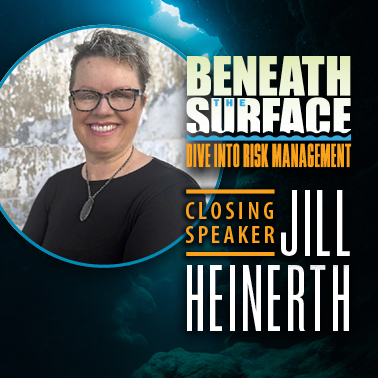
Jill Heinerth to Present Closing Session at Risk Management Educational Forum
Jill Heinerth, a world-renowned underwater explorer and cave diver, will be the closing speaker at the 31st Annual Risk Management Educational Forum. During the session, she will share her experiences, including dangerous dives into underwater caves and emphasize risk assessment, preparation for the unknown, teamwork in crises, and resilience when things go wrong “beneath the surface.”
More people have walked on the moon than have visited the places Heinerth has explored here on Earth. From underwater lava tubes to caves inside icebergs, her career has unfolded in places where certainty does not exist and every decision matters. In the closing session, Heinerth will share lessons from decades of extreme exploration, showing how to succeed when the path ahead is uncertain. Through stories and practical insights, she will highlight how adaptability, clear communication, and resilience can transform risk into opportunity and help teams perform under pressure.
Heinerth is a writer, photographer, and filmmaker, widely considered one of the most accomplished technical divers in the field. Her work spans television, film, and publishing, including series produced for PBS, National Geographic Channel, and the BBC. Jill has authored several books and produced documentaries that chronicle her experiences in some of the world’s most extreme environments.
This year’s Forum, titled Beneath the Surface—Dive Into Risk Management, will be held at the Monterey Conference Center in downtown Monterey from October 7 through 9, 2026. For questions about the Forum, please send us an email.
Print Article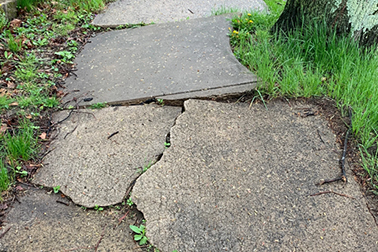
Strengthening Sidewalk Risk Management: Join Our Upcoming Roundtable
The California JPIA is hosting a virtual Risk Managers Roundtable on Monday, June 22, at 12:00 p.m., focused on sidewalk trip-and-fall claims, which remain one of the most common and challenging sources of liability for public agencies. While these claims are often difficult to defend, many can be mitigated or even avoided through proactive inspection practices and strong documentation.
This 90-minute interactive event, From Sidewalks to Settlements: Using Documentation to Win Trip-and-Fall Claims, will help Authority members build a more defensible approach to sidewalk risk management by exploring how agencies can shift from a reactive claims response to a proactive, data-driven approach. Attendees will gain practical insight into thorough inspection programs, detailed recordkeeping, tracking maintenance activities, and photo documentation to strengthen defensibility—especially when addressing common challenges like lack of notice.
What You’ll Learn
- Why sidewalk claims are often lost and how improved documentation can influence outcomes
- What effective inspection and maintenance records look like in practice
- How historical data can reshape litigation dynamics and support defensibility
- How to make the cost-benefit case for investing in proactive sidewalk programs
By the end of the session, attendees will come away with actionable strategies to enhance their agency’s inspection protocols, strengthen documentation practices, and reduce long-term liability exposure.
Why This Matters
In many sidewalk claims, the issue isn’t whether a defect existed; it’s whether the agency can demonstrate that it took reasonable steps to identify and address the defect. Agencies that maintain organized, consistent, and well-documented inspection records are far better positioned to defend against claims and reduce overall exposure.
This roundtable provides an opportunity to learn from peers, explore practical solutions, and reinforce best practices that can make a measurable difference in both claims outcomes and program effectiveness.
For more information or to register, please visit the Roundtable webpage.
Print Article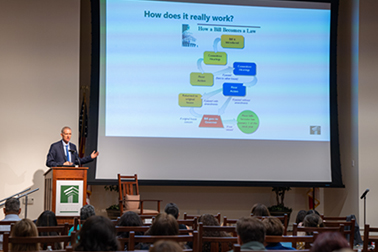
Save the Date for the Workers’ Compensation Symposium
Mark your calendars for the Workers’ Compensation Symposium on August 13, 2026, from 9:30 a.m. to 2:00 p.m., at the Authority’s campus in La Palma. This year’s symposium features a variety of sessions touching on multiple aspects of the workers’ compensation system. Members can learn and discuss pertinent subjects related to their agencies’ workers’ compensation programs.
The educational program highlights a variety of topics relevant to managing both a workers’ compensation program and individual claims, as well as the state of legislation overall. “This year’s symposium includes some new presenters and topics as well as updates on issues that are applicable to our members and their agency’s workers’ compensation program,” said Jeff Rush, workers’ compensation program manager.
Schedule highlights include:
The Symposium promises to be informative and engaging, offering attendees the opportunity to meet members of our claims team at Athens Administrators and some of our panel attorneys.
An email will be sent to members involved in workers’ compensation for their agency once registration opens. For more information about participating in the Symposium, please contact Jeff Rush by email or at (562) 467-8707.
Print Article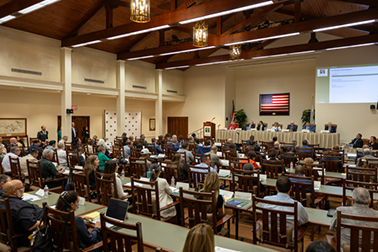
Annual Meeting of the Board of Directors
Please join the California JPIA for the Annual Meeting of the Board of Directors on Wednesday, July 22, 2026, at 7:00 p.m.
The Authority is governed by a Board of Directors and an elected nine-member Executive Committee. The Board of Directors consists of one elected official appointed by each member agency. Member cities, joint powers authorities, and special districts actively guide the Authority, ensuring that value-based decisions that benefit the entire membership are made.
The Annual Meeting will include the election of the Authority’s vice president and four Executive Committee members, recognition of the 2026 Risk Management Award winners, and a presentation about the Authority’s strategic plan and operational overview.
The meeting will be held at the Authority’s campus in La Palma. A buffet dinner will be served al fresco at 5:30 p.m., with the Board of Directors meeting immediately following. Voting delegates and up to one additional member representative are eligible to receive lodging and travel reimbursement for attending the meeting. A $100 stipend will be provided to each member agency’s voting delegate or alternate attending the meeting.
Registration for the Annual Meeting of the Board of Directors will open in early June. For questions or assistance, please contact Agency Clerk Veronica Ruiz.
Print ArticleRISK SOLUTIONS

Conflict is Normal. How it’s Handled is Culture
By Al Cobos, California JPIA Course InstructorDuring my 33 years with the Los Angeles County Sheriff’s Department, dealing with conflict was a daily occurrence. Many people think that conflict most commonly occurs when dealing with the community during enforcement actions. While this is true, internal conflict was a much greater challenge.
Throughout my law enforcement career, I have witnessed conflict both internally and externally. As a profession, we need to recognize that conflict is normal and unavoidable. How we handle conflict internally is an indicator of culture. Culture has significant impacts on personnel retention, hiring practices, employee performance, and psychological safety.
Law enforcement operates in demanding environments where sworn officers must make rapid decisions, adhere to strict policies, and manage complex interpersonal dynamics. Disagreement and tension occur routinely in this environment. In my experience, conflict is not a sign of dysfunction. The real indicator of good organizational health is how the agency chooses to address the conflict.
There are several considerations and strategies when handling internal conflict. They will provide you with a template of what can drive disputes and also how to constructively address them. The following conflict resolution processes should be assessed and implemented at all levels within the department. It is the template for addressing conflict before it creates a hostile environment, unhealthy teams, and a lack of psychological safety.
There are two standout models in policing for dealing with internal conflict. The first framework is based on workplace relationships, which tend to fall along a spectrum between transactional and relational orientations.
Transactional or Relational Model
Transactional orientations emphasize rules, policy, and procedure. Personnel who lean toward this approach often focus on compliance, measurable outcomes, documentation, and defensible decisions. These characteristics are essential in policing because they support accountability and operational consistency. These officers seek positions in internal affairs, traffic motors, professional standards, and financial crimes.
Relational orientations emphasize trust, communication, and interpersonal engagement. Officers and supervisors who operate from this perspective often rely more on influence than on authority. They tend to manage complex social interactions effectively and build stronger working relationships with coworkers and community members. These officers will pursue positions in community policing, school resource programs, peer support, and problem-oriented policing.
Effective police organizations recognize the value of both orientations. Policy and procedure provide the structure necessary for lawful operations, while relational leadership strengthens cohesion and trust within the agency. Many conflicts arise where these orientations intersect. Recognizing your personnel’s orientation can provide an action plan for resolving conflict between an employee who is primarily transaction-oriented and one who is primarily relation-oriented.
Heard, Respected, Trustworthy, and Neutral Model
A second framework to consider is the HRTN model, which stands for Heard, Respected, Trustworthy, and Neutral. The first two elements represent what employees seek when raising concerns. Personnel want to be treated with respect and feel heard. The second two elements represent what employees expect from leadership and the organization. They want to believe their leaders are trustworthy and that decisions are made in a neutral and fair manner.
When police agencies consistently apply the HRTN model, conflict resolution becomes part of the organizational culture rather than a reaction to problems. Over time, this approach strengthens communication, builds trust across ranks, and contributes to a more resilient and professional police department. It creates a culture that ensures accountability while providing support for our people.
For questions, contact California JPIA course instructor Al Cobos or your regional risk manager.
Print ArticleRE: MEMBERS
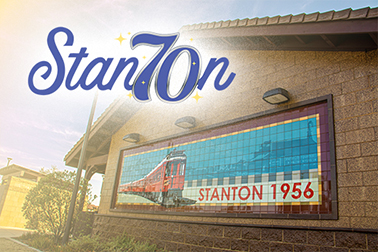
City of Stanton Celebrates 70th Anniversary
The City of Stanton will be celebrating its 70th anniversary all year long with programs and activities highlighting the community’s development and laying the groundwork for its continued growth. “We’re incorporating a special 70th anniversary logo into our city events and communications,” said City Manager Hannah Shin-Heydorn. “In addition, we’ll be hosting a special State of the City this June that highlights how far we’ve come and celebrates our community’s progress over the years.”
As the city enters a new decade, leadership remains focused on projects and initiatives that will enhance the community’s quality of life while strengthening the city’s operational foundation. Major priorities for the coming years include the development of Stanton’s new Sports Park, alongside ongoing updates and improvements to parks throughout the city. The city is also embarking on a $1 million upgrade to its Orange County Sheriff’s Department substation.
Stanton is expressly invested in helping community members access local services. “In addition to infrastructure improvements, we are harnessing the power of technology to make city services more accessible and user-friendly for our residents and businesses,” Shin-Heydorn said. “We also aim to strengthen partnerships with social service organizations while welcoming new shopping, dining, and housing opportunities that will continue to support our thriving community.”
While not explicitly designed as risk management initiatives, these projects incorporate proactive risk management principles—whether financial, operational, or safety-related. “The city strives to deliver projects more efficiently, protect public resources, and ensure successful outcomes for the community,” Shin-Heydorn said.
The City of Stanton joined the California JPIA on July 1, 2020. Over the past six years, Stanton and the Authority have developed a working partnership that spans the city’s risk management portfolio. “Stanton has been a consistently engaged partner, and that’s what makes the work productive,” said Lucy Brockmeier, senior risk manager with the California JPIA. “The Authority’s resources are most useful when a member is active on implementation, and Stanton is.”
The partnership has covered the range of risk management work that supports a city’s day-to-day operations and long-term planning, from workplace safety and personnel programs to facilities, contracts, and records administration. The Authority has also assisted with the city’s ADA Self-Evaluation and Transition Plan, including reimbursement support through the ADA Assistance Program.
“Our monthly meetings are working sessions, not status updates,” Brockmeier said. “We move pending matters forward and identify considerations early. That’s what keeps a multi-year partnership productive.”
Stanton’s community pride is reflected in its strong sense of connection, inclusivity, and commitment to quality of life. As Stanton celebrates seven decades as an incorporated city, the community continues to balance honoring its heritage with building systems and infrastructure that will serve future generations. “Our partnerships with community organizations and focus on accessible services highlight the city’s dedication to meeting residents where they are and fostering a welcoming, engaged community,” Shin-Heydorn said.
Congratulations to the City of Stanton on 70 years of service to your community!
Print Article