





Issue 174 - August 2026
NEWS: WORTHY
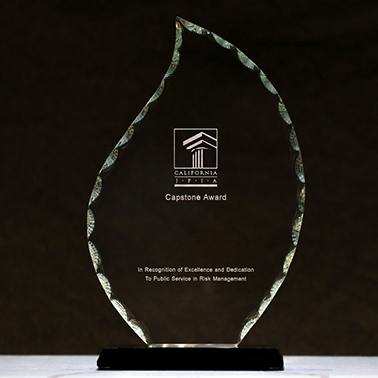
California JPIA Recognizes Capstone Winner Kate Weihe
The California JPIA has named City of Poway Senior Management Analyst Kate Weihe as the 2026 Capstone Award recipient. Weihe will be recognized for her outstanding contributions to risk management and workplace safety at the 2026 Risk Management Educational Forum, October 7–9, 2026, in Monterey.
For Weihe, the recognition was unexpected. “When I was told I would be the 2026 award recipient, I was caught completely off guard! It still doesn’t feel real,” said Weihe. “I am incredibly humbled by this prestigious honor.”
When Weihe was promoted to risk management analyst in August 2022, she immediately began drafting the city’s first Workplace Violence Prevention Policy & Training Plan. Once the plan was established, she developed an annual comprehensive training program and has since held sessions at each city facility to accommodate small, interactive groups. On that foundation, the project expanded to include improving security at facilities and establishing hands-on training drills. Recent security improvements at City Hall include installing security cameras on the campus and renovating key areas to prevent unauthorized access to workspaces. “This project has challenged me in many ways, but more importantly, has helped me grow,” said Weihe.
“Kate’s risk management approach is both thoughtful and impressive. Modern risk management is constantly evolving, so I admire her ability to balance core risk management principles with the need to adapt to real-time challenges and constraints,” said Senior Risk Manager Abe Han. “She knows when to stand firm, but she is also unafraid to change her mind when presented with a compelling perspective.”
According to HR and Risk Management Director Jodene Dunphy, Weihe’s commitment to her role and ability to turn ideas into meaningful change are among the reasons she excels. “Kate is an unsung hero in our organization, and I’m so glad she is receiving the recognition she deserves by receiving the 2026 Capstone Award,” said Dunphy.
In her role, Weihe has set the agency’s standard for workplace safety and reducing liability exposures.
“Kate takes the discipline of risk management seriously and treats it as a crucial responsibility,” said Dunphy. “Often, risk management is only noticed when things fail, but Kate’s relentless dedication and hands-on hard work ensure that Poway’s exposures are minimized as much as possible.”
Weihe’s dedication to workplace safety extends across the entire organization. By mentoring safety committee members, serving as a trusted resource for staff, and introducing risk management training into new-employee orientation, she has helped embed safety awareness in the organization’s culture and daily operations.
“Developing relationships across the city has been tremendously beneficial,” said Weihe. I have been fortunate to serve on employee committees alongside folks from every department, including the Safety Committee, the Employee Recognition Committee, and the employee newsletter crew. The organization’s leadership fosters an open-door culture, which is invaluable when dealing with all things under the risk umbrella.”
Among the many projects she manages, Weihe has strengthened the City of Poway’s risk management infrastructure through a variety of initiatives, including implementing the Company Nurse program for all employees, creating intranet pages that include workers’ compensation information, workplace safety videos, and training resources, and revising the Injury and Illness Prevention Plan to incorporate Cal/OSHA indoor heat standards. Working across departments, she helped establish safety standards for Code Compliance Officers, secured council approval for $500,000 in facility safety upgrades, and coordinated citywide emergency communication training. Her efforts also include claims management and regulatory compliance, where she has supported litigated liability claims, assisted with workers’ compensation investigations, and successfully managed the city’s response to a Cal/OSHA safety complaint.
Dunphy noted that Weihe’s influence extends beyond individual projects. “Kate does not work in a silo—employees know her, and she is extremely approachable. She works to create a culture where employee safety is valued and contributes to positive workplace morale.”
“Beyond the merits that make Kate a worthy Capstone Award winner, she is genuinely kind, gracious, curious, and humble,” said Han. “She can be having a chaotic day, but her character is consistent – and that is a rare quality in today’s fast-paced world.”
While every organization faces unique challenges, Weihe’s approach to risk management is applicable to any agency. She acknowledges that “risk is a broad spectrum that can feel overwhelming,” but she encourages others to start by identifying their biggest exposures and creating a plan to address them. A self-described fan of checklists and spreadsheets, Weihe likes to break down complex challenges into manageable steps, a philosophy that has guided her work and helped drive meaningful risk reduction throughout the City of Poway. “I look at what I would consider my biggest fires and create a plan,” said Weihe. “I also recognize the progress that happens along the way. Small steps toward a big accomplishment are to be celebrated!”
Presented annually, the Capstone Award honors an individual at a member agency who exemplifies the practice of risk management by supporting or improving risk management efforts within their agency, influencing others to do the same, and coordinating support systems that serve the member’s safety goals and needs. To learn more about the Capstone Award and view the finalist videos, visit the award webpage.
To join us and celebrate Weihe’s achievements in person, register for the 2026 Risk Management Educational Forum.
Print Article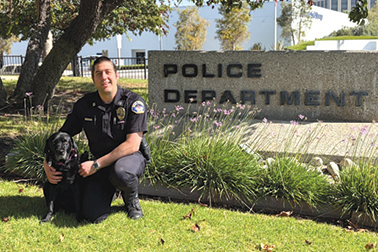
Celebrating National Service Dog Month
National Service Dog Month and ADA Service Animal Requirements
September is National Service Dog Month, an annual observance established to honor and raise awareness of the contributions of service dogs to individuals with disabilities, support organizations that train service dogs, and highlight legal rights under the Americans with Disabilities Act (ADA).
Service animals are defined as dogs that are individually trained to do work or perform tasks for people with disabilities. Under the ADA, dogs whose sole function is to provide comfort or emotional support do not qualify as service animals. The work or task a service dog has been trained to provide must be directly related to the person’s disability. Some examples of these tasks include guiding individuals who are blind, alerting individuals who are hard of hearing, pulling a wheelchair, picking up items such as medication, assisting during a seizure, and providing support for balance.
In addition to service dogs, the Department of Justice (DOJ) has a separate provision regarding miniature horses. As with their canine equivalents, miniature horses must be individually trained to perform a specific task for a person with a disability. As a service animal, a miniature horse has the right to accompany their handler in public places covered by the ADA. Miniature horses are less common than service dogs, but they can be a legitimate service animal.
Generally, Title II (State and Local Governments) and Title III (Public Accommodations) entities must permit service animals to accompany people with disabilities in all areas open to the public. Exceptions include situations in which the service animal poses a direct and immediate threat to others or would fundamentally alter the nature of a service or program. In such cases, service animals may be prohibited. A service animal must also be under the control of its handler. Under the ADA, service animals must be harnessed, leashed, or tethered, unless the individual’s disability prevents the use of these devices or they interfere with the service animal’s safe, effective performance of tasks. In these cases, the individual must maintain control of the animal through voice, signal, or other effective controls.
When it is not readily apparent what service an animal provides, only limited inquiries are allowed. Staff may ask two questions: (1) Is the dog a service animal required because of a disability, and (2) what work or task has the dog been trained to perform. Staff cannot ask about the person’s disability; require medical documentation, a special identification card, or training documentation for the dog; or ask that the dog demonstrate its ability to perform the work or task.
It is important to provide staff training on the ADA’s service animal requirements to prevent potential grievances. Service animal handlers are not required to show a certificate or identification, have a vest on their animal, or prove their animal is a service animal. A service animal may not be excluded based on assumptions or stereotypes about the animal’s breed, how the animal might behave, or their size. Staff should also understand that there are invisible disabilities. Your agency’s staff are not required to provide care for or supervise a service animal: It is always the handler’s responsibility. There is no limit on the number of service animals a person can use; however, the number must be reasonable, and the handler must explain what each animal does. A covered entity cannot charge a deposit, surcharge, cleaning fee, or other fee to a person with a disability as a condition of allowing the person to use their service animal. However, if a service animal causes damage, the handler must pay for repairs. The California Disabled Persons Act allows disabled persons to bring service animals in training to public places. Service animals in training must be on a leash and wear a county-issued tag identifying them as service animals.
There are instances where a service animal may need to be excluded. A handler may be asked to remove a service animal from the premises if the animal is out of control (e.g., running around, growling, barking) and the handler does not take effective action to control it, or if the animal is not housebroken. However, accidents may happen. If the handler can, they should clean up after their animal. Service animals can also be excluded if their behavior poses a direct threat to the health or safety of others. If it is determined that a service animal will be excluded, staff should remain calm, respectful, and professional when asking the handler to remove the animal and explain why it must be removed. The handler may return without the animal. While not required under the ADA, implementing a service animal policy is recommended. Written policies are typically required under a DOJ settlement agreement.
Member Spotlight: Police Facility Dog Yosa
While not a service dog as defined under the ADA, Seal Beach Police Department Facility Dog Yosa serves an important role in supporting both the community and department personnel. Yosa is an eight-year-old Labrador professionally trained and provided by Canine Companions, an organization accredited by Assistance Dogs International (ADI), which establishes internationally recognized standards for assistance-dog training, placement, and care. She is used to help facilitate interviews with children, make death notifications, and bring comfort to those exposed to trauma. Facility dogs like Yosa receive extensive professional training to work alongside a trained handler in a specific professional setting. Yosa knows approximately 50 commands and can assist during interactions with victims and witnesses, at community events, in employee wellness efforts, and during critical incidents.
A facility dog is different from an emotional support or therapy dog. Emotional support animals primarily provide comfort through their presence, while therapy dogs typically participate alongside their handlers in visits or activities designed to comfort others.
That distinction is important because the value of a facility dog comes not only from the dog’s temperament, but from the combination of professional training, a trained handler, and a clearly defined purpose. ADI-accredited programs follow rigorous standards related to dog selection, training, placement, handler education, and ongoing support. For a police agency, that structure helps ensure the dog is prepared to work safely and predictably in environments that may be unfamiliar, crowded, emotional, or stressful. That professional foundation matters in practice.
Yosa’s role is intentionally broad, but it is not casual. She may sit quietly beside a child during an interview, remain with a family during a difficult notification, attend a community event, or spend time with employees following a traumatic incident. In each setting, the goal is to reduce stress, encourage communication, and create a calmer environment. She is also available as part of the department’s wellness efforts, giving employees a low-pressure way to decompress after difficult calls or demanding shifts. “Yosa has a unique ability to change the tone of a room,” Captain Nick Nicholas said. “She helps us connect with people during difficult moments and provides valuable support to our own personnel.”
Nicholas noted that agencies considering a facility dog should think carefully about how the dog will be incorporated into daily operations. A successful program requires more than selecting the right dog. The handler must be available to maintain the dog’s training, respond when the dog can be useful, manage the dog’s health and care, and make thoughtful decisions about when deployment is appropriate. The organization must understand that the dog is a working resource with a specific mission, not simply a mascot or office pet. There are also practical considerations. Agencies should establish clear policies addressing the dog’s role, supervision, deployment, care, transportation, training, and use during critical incidents. They should also educate employees about what the dog is and what it is not, and how the program supports existing victim services, community engagement, and employee wellness efforts.
Another important consideration is continuity. A facility dog becomes most effective when employees understand when to request the team, and the handler is integrated into the agency’s response practices. Success also depends on understanding the dog’s capabilities and allowing the handler to decide whether a particular environment or assignment is appropriate at that time.
For agencies considering a facility dog, Nicholas recommends working with an ADI-accredited organization. “The right training, handler, organizational support, and clearly defined mission are what make the program successful,” said Nicholas. Members considering obtaining a facility dog are encouraged to contact Nicholas, who has guided several agencies through the comprehensive process of obtaining their department’s facility dog.
For more information, visit:
ADA Requirements: Service Animals
Frequently Asked Questions about Service Animals and the ADA
Canine Companions–Facility Dogs
If you have questions, please contact your regional risk manager.
Print Article
National Preparedness Month
National Preparedness Month, observed every September since 2004, is a Federal Emergency Management Agency (FEMA)-led initiative to encourage individuals, families, and communities to be ready for disasters and emergencies. The annual event emphasizes the importance of being informed about potential risks, creating an emergency plan, building a disaster kit, and getting involved in community preparedness efforts. By fostering awareness and encouraging proactive measures, the initiative aims to reduce the impact of unforeseen events and build more resilient communities. More information on this awareness campaign can be found on the U.S. Government’s National Preparedness Month | Ready.gov website.
By taking advantage of available resources, including those offered by the California JPIA, members can prepare in the following ways:
- Training: Emergency Preparedness, Earthquake Preparedness, Fire Prevention, CPR, and First Aid Training can mean the difference between life and death in an emergency. In-person and online training information is available by visiting myJPIA. Members should be aware that in the event of a disaster, completion of specific training may be required to qualify for FEMA funds. The Emergency Management Institute (EMI) offers self-paced courses designed for those with emergency management responsibilities and the public in general. All are provided free of charge to those who qualify for enrollment. For a complete listing of courses, visit the FEMA training page.
- Inspect for Safety: Inspect agency-owned facilities for emergency-related exposures, including clear evacuation routes, storage practices, securing furniture or other large objects from falling, proper lighting, and emergency supplies. Visit the California JPIA’s online resource library for various inspection checklists.
- Develop Emergency Action and Fire Prevention Plans: Cal/OSHA-compliant programs should be in writing and cover the actions employers and employees must take to ensure employee safety in all emergencies. Elements of the plan include the following:
- Emergency escape procedures and emergency escape route assignments;
- Procedures to be followed by employees who remain in their positions to operate critical operations before they evacuate;
- Procedures to account for all employees after evacuation has been completed;
- Rescue and medical duties for those employees who can perform them;
- The preferred means of reporting fires and other emergencies;
- Names or regular job titles of persons or departments who can be contacted for further information or explanation of duties under the plan;
- An employee alarm system that complies with Article 165 of Cal/OSHA’s Fire Protection Regulations;
- The types of evacuations to be used in emergency circumstances; and
- Training.
Download an Emergency Action Plan template from the California JPIA’s online resource library.
- Evaluate Applicable Insurance Coverages: Evaluate your agency’s coverage for emergency-related perils. The California JPIA’s property program includes all-risk coverage for real and personal property, with the option of adding earthquake and flood coverage for damages or loss of use due to these perils. Additional information can be found on the Authority’s insured programs page.
In addition to what is offered by the California JPIA, various resources are available from the Ready Campaign and the California Office of Emergency Services.
If you have any questions or need additional information or resources, please contact your regional risk manager.
Print ArticleRISK SOLUTIONS

Preventing Sidewalk Claims
Cracked, lifted, and uneven sidewalks are a tremendous liability for public agencies. Over the last five years, the California JPIA has paid nearly $9 million to resolve trip-and-fall claims on behalf of its members, and the vast majority of those claims were related to preventable sidewalk maintenance issues.
Many of the sidewalk trip-and-fall claims seen in the liability program involve older members of the community who sustain significant orthopedic injuries requiring surgery. Occasionally, there are claims where a person hits their head on a sidewalk and sustains a serious brain injury. While the orthopedic injury claims on their own can result in substantial defense and settlement costs, the brain injury cases can be very expensive depending on the person’s cognitive residuals and functioning. Settlements for such cases can be in the seven-figure range.
During the June 22 Risk Managers Roundtable, David Ferrante-Alan, one of the Authority’s liability defense panel attorneys, discussed in detail the importance of having a sidewalk inspection program to identify and eliminate problematic sidewalk conditions to prevent claims. The Authority places a tremendous emphasis on risk management, with members and their public works staff acting as the first line of defense.
To assist members with their sidewalk inspection efforts, the Authority has a master services agreement with pre-negotiated services and pricing through a business partner, Precision Concrete Cutting. Many members have worked with Precision to identify and remedy their sidewalk risks, resulting in significant savings on the claims side through loss prevention.
When sidewalk claims are litigated, the lack of a sidewalk inspection program, combined with a significant displacement of the sidewalk, is usually problematic, meaning the claim will typically have to be resolved through often expensive litigation. However, if members proactively inspect their sidewalks on a regular schedule and eliminate trip hazards when they are discovered, the financial benefits are significant, and injuries are prevented. As Benjamin Franklin so famously said, “An ounce of prevention is worth a pound of cure.”
Members can find more sidewalk safety resources in the Authority’s online library by searching for the keyword “sidewalk.”
Print Article
Nevaeh Youth Sports Safety Act: Key Compliance Dates for Public Agencies
New Youth Sports Safety Requirements Are Approaching
The California Legislature has expanded the requirements of the Nevaeh Youth Sports Safety Act to further address the risk of sudden cardiac arrest during youth sports activities. The law applies to youth sports organizations, which include local governmental agencies that sponsor or conduct amateur sports competitions, training, camps, or clubs involving participants 17 years of age or younger. The law establishes two major compliance dates: January 1, 2027, and January 1, 2028.
Requirements Effective January 1, 2027
Beginning January 1, 2027, youth sports organizations must:
- Ensure coaches are trained in CPR and AED use.
All coaches must be certified to perform cardiopulmonary resuscitation (CPR) and operate an automated external defibrillator (AED). Certifications must be maintained and renewed at least every two years.
- Adopt a written cardiac emergency response plan.
Organizations must develop and maintain a written cardiac emergency response plan that addresses:- AED locations
- Procedures to follow during a sudden cardiac arrest or cardiac emergency
- Responsibilities of coaches, administrators, athletes, and other designated individuals
- How participants and staff will be notified of and trained on the emergency response procedures
- Annual review of the plan
- Communicate the plan to families.
The emergency response plan must be shared annually with parents and guardians, either directly or through an internet link, along with information about AED locations and designated responders.
Requirements Effective January 1, 2028
Beginning January 1, 2028, youth sports organizations must:
- Provide access to an AED during all official practices and matches.
Athletes must have access to an AED during any official practice or match. This deadline was moved from January 1, 2027, to January 1, 2028, by Assembly Bill 310.
- Maintain and test AED equipment.
Organizations must ensure AEDs are maintained and tested according to the manufacturer’s specifications and applicable state and federal requirements.
Agencies that operate youth sports programs may wish to begin preparing now by:
- Identifying employees, volunteers, and coaches who will require CPR/AED certification.
- Developing or updating a written cardiac emergency response plan.
- Establishing procedures for annual communication and training.
- Evaluating AED availability at practice and game locations.
- Budgeting for AED acquisition, replacement equipment, maintenance, inspections, and training costs.
- Reviewing agreements with third-party youth sports organizations to clarify responsibility for compliance with the Act. (This is a risk management recommendation, not a statutory requirement.)
While the AED access requirement does not take effect until January 1, 2028, the coach certification and emergency response planning requirements become effective one year earlier on January 1, 2027. Agencies that begin planning now will be better positioned to implement training, develop emergency procedures, communicate with participants and families, and evaluate AED needs before the statutory deadlines arrive.
The California JPIA provides First Aid, CPR, and AED training to member agency employees. Contact the training department for more information or to schedule training.
Sources:
Health & Safety Code – Nevaeh Youth Sports Safety Act.
AB 310, Nevaeh Youth Sports Safety Act
Additional resources (e.g., Cardiac Emergency Response Plan (CERP) template):
Eric Paredes Save-A-Life_Foundation/CERP-for-youth-sports-teams/
Print Article
Wood Chipper Safety Shield Program Expands Across JPIA Membership
Following the California JPIA’s launch of funding for the Wood Chipper Safety Shield (WCSS), members throughout the state are taking proactive steps to enhance employee safety around one of the most hazardous pieces of equipment used in public works, parks, and urban forestry operations.
The WCSS uses magnetic proximity technology to help prevent operator entanglement. Sensors installed in the chipper’s infeed hopper detect magnetic wrist and ankle bands worn by employees. If a band crosses the safety plane, the feed rollers immediately stop, providing an added engineering control during chipper operations.
Each funded WCSS installation includes the device itself, eight magnetic Velcro wrist and ankle bands equipping two operators, and on-site safety orientation training. Members operating multiple wood chippers are encouraged to evaluate whether additional units should be installed so each chipper has the same level of protection.
Member Agencies Share Early Feedback
Several California JPIA members have installed the WCSS and reported positive operational experiences, including appreciation for the added safety measure, orientation training, and integration into existing safety practices.
City of San Marino: The agency reported a smooth implementation and no operational concerns following installation. “The WCSS works well, and we have had no issues at all.”
City of Paso Robles: Staff noted value in both the safety equipment and the on-site orientation provided during installation. “No issues with the WCSS at all, it works fine for us, and we appreciate the extra safety it provides. In addition, we really appreciate the orientation you gave. The additional training was good for us, and we have implemented what you recommended.”
City of Pismo Beach: Their experience underscores how the system can reinforce safer positioning around the chipper during operations. “The crew said it took getting used to because they were used to going beyond the safety plane of the chipper, and this action would stop the feeding due to the WCSS. Now that they have some time using it, they have no issues and appreciate the extra safety added to the chipper.”
City of Chino Hills: They used the installation to refresh procedures, reinforce expectations, and communicate the change to employees. “All on board. We actually did a PowerPoint presentation to all of our workers and implemented new policies and procedures for using the chipper after the WCSS was installed. We have had no issues with the WCSS.”
City of Santa Fe Springs: Staff reported successful installation and operation of the WCSS. “We have had no issue with the WCSS being installed on our chipper. It works well.”
Recent JPIA Member Installations
Recent installations have included the cities of Lomita, Duarte, Cerritos, Santa Clarita, San Luis Obispo, San Dimas, Arroyo Grande, Pismo Beach, Paso Robles, Chino Hills, San Marino, San Juan Capistrano, and Santa Fe Springs.
Funds Remain Available
The California JPIA continues to fund the purchase and installation of one WCSS per member operating a wood chipper, subject to available funding. The approximate value of each system is $5,000 to $7,000.
Funding is available on a first-come, first-served basis until allocated funds are exhausted. Members operating wood chippers are encouraged to contact their regional risk manager to request installation and confirm availability.
While training, personal protective equipment, and safe work procedures remain essential, the WCSS provides an additional engineering control that can help reduce the risk of catastrophic injury during wood chipper operations.
To request a WCSS installation, contact your regional risk manager.
Print Article
Resources Update
We are pleased to report the following updates to our resource library, including updates to existing and newly developed resources:
New
ADA Title II—Digital Accessibility Procurement Guidance
This resource was created to help collect information from vendors about the accessibility of web and mobile applications and to provide accessibility considerations into procurement processes and agreements in support of Americans with Disabilities Act (ADA) Title II compliance.
Updated
Americans with Disabilities Act White Paper
This resource was reviewed for updates and provides a high-level overview of applicable laws and standards, along with practical considerations to support accessibility compliance efforts.
Cybersecurity Self-Assessment Tool
This resource content has been updated to better align with current cyber risk management practices, primarily by removing outdated or ambiguous language.
Resources can be accessed and downloaded via the online library located in the resources section of the Authority’s website. Resources available in Word format are for members to customize to agency-specific policies and procedures.
If you have questions, please contact your regional risk manager.
Print ArticleRE: MEMBERS

California JPIA Welcomes New Member City of Thousand Oaks
The California JPIA is pleased to announce the addition of the City of Thousand Oaks to the Authority’s primary liability program, effective July 1, 2026.
“Joining the California JPIA is a strong strategic fit for the City of Thousand Oaks and reflects our continued commitment to thoughtful risk management, fiscal stewardship, and organizational excellence,” said City Manager Drew Powers. “The California JPIA’s collaborative, member-driven approach aligns well with how we operate, and we’re proud to bring Thousand Oaks’ strong operational practices and culture of safety to the partnership.”
Located in Ventura County between Los Angeles and Santa Barbara, Thousand Oaks is recognized for its beautiful open spaces, environmental stewardship, and commitment to providing high-quality municipal services. The city serves more than 125,000 residents and spans 56 square miles, with 15,000 acres of open space.
Risk management at the city is an organization-wide responsibility that is integrated into daily operations and long-term planning. By working collaboratively to identify and address risks, departments support informed decision-making, protect public resources, and help ensure the city continues to provide reliable services while protecting both employees and the community.
“The City of Thousand Oaks has built a strong reputation for responsible governance and long-term planning,” said California JPIA Chief Executive Officer Alex Smith. “Their dedication to protecting public resources displays the same proactive risk management mindset embraced by our members. We look forward to a strong and successful partnership.”
The city selected the California JPIA to further strengthen its approach to risk management, claims support, and organizational resilience. As a member, Thousand Oaks will benefit from the Authority’s collaborative network of public agencies, variety of training opportunities, and claims and litigation support.
A key factor in the city’s decision was the Authority’s reputation for providing trusted guidance and resources that extend beyond traditional insurance coverage. By leveraging the Authority’s risk management expertise, training programs, and claims support services, the city can strengthen its risk management approach, reduce loss exposure, and build long-term organizational resilience, while allowing staff to focus more time on serving residents and delivering reliable community services.
Welcome, City of Thousand Oaks, to the California JPIA!
Print ArticlePRO: FILES
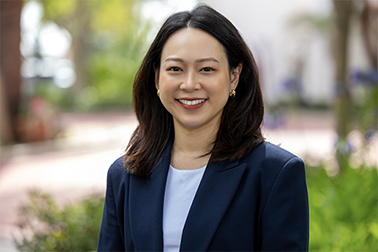
California JPIA Welcomes Accountant Lucy (Yulu) Lee
The California JPIA is pleased to welcome Lucy (Yulu) Lee as its newest accountant.
After earning a bachelor’s degree in history in Taiwan, Lee discovered her interest in financial management when she moved to the United States. “Looking back, it is interesting to see how my journey went from studying the past to balancing the books,” said Lee. “It turns out that both fields require curiosity, attention to detail, patience, and the ability to uncover the story behind the information. Whether researching historical information or reviewing financial records, I enjoy putting pieces together and finding meaningful connections.”
She began her career at a Certified Public Accountant firm, gaining experience working alongside tax professionals and managing client financial records. She later transitioned into local government accounting, developing expertise in fund accounting, budgeting, and financial reporting. During her tenure in municipal government, Lee collaborated closely with city departments and gained direct exposure to risk management practices. That experience introduced her to public agency insurance pools and the California JPIA.
“When I saw an opening at the California JPIA, I decided to apply because it was a great opportunity to combine my accounting background with my interest in risk management and public service,” said Lee. “I appreciate being part of an organization that supports public agencies, and I look forward to contributing to the mission of the Authority.”
“Lucy is a fantastic addition to our team, bringing an ambitious mindset and a wealth of great experience,” said Finance Director Jason McBride. “She is exceptionally thoughtful and thorough in her work, which not only elevates our internal team operations but also ensures we deliver the highest level of accuracy and value to the Authority and its members.”
For Lee, reviewing financial statements extends far beyond balancing numbers. She views financial recordkeeping as an essential tool for organizational clarity and strategic problem-solving. “Every number tells a story,” said Lee. “Behind every report or reconciliation, there is a reason why the numbers look the way they do. I enjoy investigating differences, finding solutions, and helping create accurate financial information that people can rely on.”
Alongside her quantitative curiosity, Lee brings adaptability and a dual perspective gained from both private sector accounting and local government administration. Her background enables her to evaluate financial processes, identify connections to risk management, and enhance operational efficiency. “As we modernize our finance function, her fresh perspective and willingness to adapt processes are invaluable,” said McBride.
“The most rewarding part of my work is solving problems and seeing improvements,” said Lee. “Whether it is resolving a reconciliation issue, learning a new system, or improving a process, I enjoy seeing how small improvements can make daily operations more efficient.”
Welcome to the Authority, Lucy!
Print ArticleLEGAL MATTERS

Public Law Update – Court of Appeal Rejects Rigid “Days or Weeks” CPRA Timelines, Deciding Agencies Must Make Records “Promptly Available” Based on the Facts of Each Request
By Denise S. Bazzano, Partner; and Johnson Yu, Summer Associate
Originally published on June 26, 2026. Republished with permission from Burke, Williams & Sorensen, LLP.
Voice of San Diego v. San Diego Unified School District concerns the timing requirements imposed on public agencies responding to requests under the California Public Records Act (“CPRA”). Voice of San Diego (“Voice”), an online news organization, regularly submitted CPRA requests to the San Diego Unified School District concerning local education and District affairs. After years of requests, Voice alleged the District maintained a regular and ongoing practice of delaying, obstructing, and withholding public records in violation of the CPRA. This is an important decision for public agencies responding to CPRA requests because it confirms that “promptly available” for the actual production of documents responsive to a CPRA request is a flexible standard, not a one-size-fits-all deadline.
Voice argued that once a public agency determines it possesses disclosable records, the term “promptly available” in Government Code section 7922.530(a) is to be interpreted to mean the agency must produce those records within “days or a few weeks” of the CPRA’s initial 10-day determination deadline, or 24 days if unusual circumstances apply (initial 10-day plus 14-day extension for unusual circumstances). Voice also brought a taxpayer claim under Code of Civil Procedure section 526a, contending that the District’s use of public funds to maintain its allegedly unlawful CPRA practices constituted an illegal expenditure of public funds.
The trial court rejected Voice’s interpretation of the CPRA and found that Voice failed to prove the District maintained an unlawful practice of delaying or withholding public records. The trial court credited evidence that many of Voice’s requests were broad, complex, covered lengthy periods of time, required searches across multiple departments and schools, involved both electronic and hard-copy records, and required review and redaction for student and employee privacy. The trial court therefore entered judgment in favor of the District.
The Court of Appeal affirmed and rejected any interpretation that inserted words or quantification of timing for production of records into the CPRA. The Court held that the CPRA does not impose a fixed deadline for the actual production of public records. Although the CPRA requires an agency to make its initial determination within 10 days, subject to a limited extension for unusual circumstances, the statute separately requires only that disclosable records be made “promptly available.” The Court declined to graft a “days or weeks” requirement onto the statute where the Legislature had not included one.
Instead, the Court held that whether records have been made “promptly available” must be determined case by case. Relevant circumstances may include the specificity and breadth of the request, the nature and location of the records sought, the volume of data to be searched, the storage medium involved, the need for exemption review and redactions, the complexity of the request, the size and scope of the responding agency, the agency’s volume of other records requests, and external circumstances affecting the agency’s ability to respond.
The Court also rejected Voice’s taxpayer claim. Because Voice failed to establish that the District maintained an unlawful CPRA policy or practice, there was no illegal expenditure of public funds to enjoin under Code of Civil Procedure section 526a.
Voice of San Diego v. San Diego Unified School District is a significant decision for public agencies and provides important guidance on producing responsive records to CPRA requests, particularly large or complex requests requiring searches across multiple departments, substantial email review, privacy analysis, or rolling productions. The opinion does not permit agencies to delay or obstruct public access to records. But it does confirm that “promptly available” is a flexible standard, rather than a rigid deadline. Public agencies should continue to act diligently, communicate with requesters, document the scope and burden of requests, and consider rolling productions of responsive records, where appropriate.
Burke, Williams & Sorensen, LLP regularly advises clients on legal matters relating to public law and responding to CPRA requests.
All materials have been prepared for general information purposes only to permit you to learn more about our firm, our services and the experience of our attorneys. The information presented is not legal advice, is not to be acted on as such, may not be current and is subject to change without notice.
Print Article
Court Rules Client’s AI Communications Were Not Protected by Attorney-Client Privilege or Attorney Work Product Doctrine
By Amy W. Estrada, Partner; Catherine M. Lee, Partner; Kathryn E. Meola, Partner; Jon M. Setoguchi, Partner/General Counsel; and Benjamin R. Wang, Associate
Originally published on August 10, 2026. Republished with permission from Atkinson, Andelson, Loya, Ruud & Romo.
Generative artificial intelligence can be useful in legal matters, but it also raises important questions about confidentiality. On February 17, 2026, the United States District Court for the Southern District of New York addressed those questions in United States v. Heppner. The decision does not control California courts, but it offers practical guidance for clients and attorneys who want to protect confidential communications when using generative AI.
Heppner involved Bradley Heppner, who was charged with fraud and making false statements. On November 4, 2025, the FBI seized electronic devices and documents containing Heppner’s communications with “Claude,” a generative AI platform operated by Anthropic, PBC. Heppner had used Claude to help prepare his defense strategy.
Heppner’s attorneys had not told him to use Claude. Even so, Heppner argued that his communications with Claude should be protected by the attorney-client privilege because they included information Heppner had learned from his attorneys, were created so he could consult with his attorneys, and were later shared with them.
The court disagreed. It explained that the attorney-client privilege applies only when a communication: (1) is between a client and an attorney, (2) is intended to be confidential and is actually kept confidential, and (3) is made to obtain or provide legal advice. The court found that Heppner’s communications with Claude did not meet those requirements.
First, Claude was not Heppner’s attorney. The court stated that “Claude is not an attorney,” and that the privilege depends on a human relationship in which one person owes a legal duty to another.
Second, Heppner had been told through Claude’s user agreement that his communications were not confidential. The court noted that Claude users agree to Anthropic’s privacy policy, which allows Anthropic to collect prompts and outputs and disclose that data to third parties, including government agencies.
Third, the court found that Heppner was not using Claude to obtain legal advice from Claude itself. Instead, he was using Claude to help him prepare for discussions with his attorneys. The court concluded that this was not enough for the privilege to apply.
The court suggested the result might have been different if Heppner had used Claude at his attorney’s direction. In that situation, Claude might have functioned more like an outside professional assisting the attorney, which can sometimes fall within the attorney-client privilege.
The court also held that the attorney work product doctrine did not apply. The communications were not prepared by, or at the request of, Heppner’s attorneys and did not reflect their legal strategy. The court did not decide whether the doctrine would apply if an attorney had directed the client’s use of Claude.
California law protects confidential attorney-client communications and writings that reflect an attorney’s “impressions, conclusions, opinions, legal research, or theories.” Although Heppner is not binding in California, it identifies issues California clients and attorneys should consider when using generative AI in legal matters.
A key concern is how generative AI platforms handle user data. Anyone using AI for legal matters should avoid platforms that allow broad third-party access to prompts or outputs. More secure platforms may encrypt user data, limit outside access, and provide protected storage. These features may help show that AI prompts and outputs were intended to remain confidential.
This concern also applies outside the litigation context. For example, people handling confidential information in personnel investigations or other sensitive matters should not enter that information into an AI platform unless they understand who may access it.
Clients and attorneys should also consider who is directing the AI use. Heppner used Claude on his own, without direction from his attorneys. For that reason, the court found that Claude was not acting as his attorneys’ agent, and the materials Claude produced were not attorney work product.
If clients and attorneys decide to use generative AI in a legal matter, they should avoid the circumstances present in Heppner. Clients should not use generative AI for a legal matter on their own before consulting counsel. When AI is appropriate, it is safer for the attorney to direct or perform the use. Under Heppner and California privilege principles, AI communications are more likely to be protected when an attorney uses AI consistent with applicable ethical rules to conduct legal research or form legal advice for a client.
The law on privilege and generative AI is still developing, and California courts may reach different conclusions than the Heppner court. Still, Heppner highlights practical steps that may help clients protect confidential information when using generative AI.
AALRR will continue to monitor legal and policy developments in this area. If you have questions about this Alert, please contact the authors or your usual counsel.
This AALRR publication is intended for informational purposes only and should not be relied upon in reaching a conclusion in a particular area of law. Applicability of the legal principles discussed may differ substantially in individual situations. Receipt of this or any other AALRR publication does not create an attorney-client relationship. The Firm is not responsible for inadvertent errors that may occur in the publishing process. © 2026 Atkinson, Andelson, Loya, Ruud & Romo
Print Article