

Issue 175 - September 2026
RISK SOLUTIONS
Committing to Continuous Improvement in Youth Protection
Through the Authority’s Praesidium webpage, member agencies have access to model policies, screening toolkits, crisis management resources, and specialized training programs. These resources assist local entities in identifying boundary violations, preventing incidents, and fostering an organizational culture centered on child safety.
“We have to move from compliance to commitment,” said Praesidium Senior Risk Consultant James Bourgeois. “Mandated reporter training tells us what to do after something happens; prevention focuses on stopping it before it begins.”
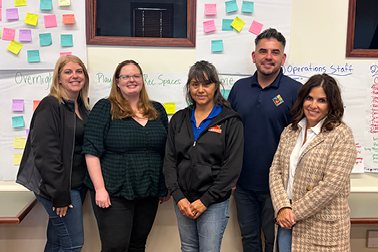
To operationalize this commitment, the California JPIA hosted the Certified Praesidium Guardian Program, an individual professional certification in abuse risk management for organizational leaders responsible for youth and vulnerable-population programs. The program is designed to help leaders build and sustain comprehensive abuse prevention systems, maintain momentum after initial implementation, and prevent organizational practices from drifting away from established safety standards.
Certification is earned through a structured process that includes pre-work, active participation in an intensive workshop, and a knowledge assessment. To maintain the credential and encourage continued professional development, Certified Praesidium Guardians must complete 30 safety points over a three-year certification period.
- During the workshop, participants move beyond general awareness and apply prevention principles to realistic operational challenges. They examine case scenarios, practice behavior-based interviewing, identify boundary-crossing and red-flag behaviors, strengthen response planning, and develop practical steps for creating and maintaining a culture of safety. The work is organized around the eight components of the Praesidium Safety Equation: Policies
- Screening and selection
- Training
- Monitoring and supervision
- Internal feedback and systems
- Consumer participation
- Responding
- Administrative practices
Desert Recreation District Community Services Supervisor Maureen Archuleta participated in the 2026 Certified Praesidium Guardian Program to enhance safety measures across the district’s after-school programs, which employ 125 staff members. Following the training, Archuleta immediately integrated behavioral screening practices into the district’s recruitment procedures ahead of peak seasonal hiring.
“The training equipped us to probe deeper during interviews,” said Archuleta. “When an applicant provides a general response regarding past employment issues, we now ask follow-up questions to understand the situation fully, recognize red flags for what they are, and make informed hiring decisions.”
Archuleta is also incorporating Praesidium frameworks into employee orientation and annual safety training, reinforcing that staff members must report red-flag behaviors even before a reportable incident occurs. “Staff must find the courage inside to speak up because we are advocating for some of the most vulnerable members of our community,” said Archuleta.
City of Duarte Parks and Recreation Director Manuel Enriquez also completed the 2026 Certified Praesidium Guardian Program and reflected on the holistic nature of Praesidium’s recommended abuse prevention framework. “It’s not just one component that minimizes risk,” said Enriquez. “You really do need to stay on top of all eight components of the Praesidium Safety Equation and continue working to improve each of them to maintain a safe environment. Everyone plays a role, and consistent attention across all of them is what allows our team to maintain safety.”
Following the training, Enriquez updated the city’s reference check questionnaires and added behavior-based questions to job candidate interviews. He is currently collaborating with department leadership to update the consumer code of conduct across all city facilities and programs before presenting the revised policy to the city council for formal review.
Many agencies face challenges in implementing these systems, including limited resources, staff capacity, and discomfort discussing difficult topics. However, when prevention becomes a shared priority, communities respond positively. Open communication and consistent training help remove the stigma and awkwardness often associated with discussing abuse prevention. When reflecting on an incident in Santa Monica, Volunteer Coordinator Thomas Carpenter said, “We learned that it takes time for supervisors to feel comfortable reporting what they see. Once they understood they were reporting behavior—not people—confidence grew.”
Building safer programs is a shared responsibility, but it starts with clear direction. “Prevention starts with leadership,” said Bourgeois. “When commitment comes from the top down, agencies can create a consistent, transparent culture of safety.” Preventing abuse requires more than compliance; it requires a collective commitment. By shifting from reactive compliance to proactive prevention, member agencies reduce organizational risk and create safe, supportive environments for the communities they serve.
To learn more about Praesidium resources and the Guardian Program, please contact your regional risk manager or visit the Authority’s Praesidium webpage.
< Back to Full Issue Print Article