


Issue 177 - November 2026
NEWS: WORTHY

Design Immunity Applies to Inadequate Warning Claims
By Daniel Barer, Partner, Pollak, Vida & Barer
Originally published on September 25, 2026. Reprinted with permission from Pollak, Vida & Barer.
In Tansavatdi v. City of Rancho Palos Verdes, published September 24, 2026, the Second District Court of Appeal, Division 4 affirmed summary judgment for the defendant city. A bicyclist riding down a city street toward an intersection failed to see an 80-foot truck turning in the intersection. He went under the wheels of the truck and passed away. His mother sued the city, alleging the roadway was a dangerous condition of public property. She attacked the design of the roadway and also alleged failure to warn. She initially argued the roadway was dangerous because a bicycle lane that appeared elsewhere on the street was not present leading up to the intersection.
The trial court granted summary judgment on that claim. In a prior appeal, the appellate court affirmed that the city was entitled to design immunity for the absence of the bicycle lane, but ruled that the trial court had failed to address the claim of failure to warn of a concealed trap, which was not barred by design immunity.
The California Supreme Court affirmed this decision, and remanded the case for further proceedings. The Supreme Court ruled that design immunity for creation of a dangerous condition did not categorically bar liability for failure to warn of a known dangerous condition; and that signage immunity did not bar a failure to warn claim if there was a concealed trap of which the entity had notice. The Supreme Court declined to address a situation where the design for property included the warnings that were in place on the property. On remand, the plaintiff contended the roadway was dangerous due to alleged limited sight lines, creating a concealed trap, and so required more warning signs. The city again moved for summary judgment based on design immunity, sign immunity, and lack of a concealed trap. The city pointed to extensive signage approaching the intersection warning drivers of the curve, the oncoming intersection, and the speed limit. It produced evidence that the signs were part of the approved roadway design. The trial court granted summary judgment, based both on design immunity and signage immunity.
The appellate court affirmed summary judgment, based solely on design immunity. The court ruled that when (a) the public entity has provided some warning of the allegedly dangerous condition, and (b) that warning was included as part of a reasonable plan or design that would be otherwise entitled to design immunity under section 830.6, then (c) design immunity
may apply. The court distinguished between cases in which the public entity has provided no warning of a dangerous condition, and cases–like this one–in which the public entity has provided some warning of the alleged dangerous condition but a plaintiff alleges the warning was insufficient. The court reasoned that a plaintiff’s complaint that an existing warning, approved as part of a government’s design for public infrastructure, are, in essence, complaints about the government’s design of the warning. Design immunity bars such contentions. The court further reasoned its decision was consistent with published decisions that denied qualified immunity where public entities had notice of dangerous conditions caused by approved designs, and provided no warnings. Granting design immunity in cases like this one would not allow public entities to withhold needed warnings with impunity in perpetuity; existing law provides that public entities lose design immunity where the entity has notice that changed physical conditions have caused an approved design to become dangerous in operation. Finding design immunity in cases like this would not render Government Code section 830.8’s signage immunity superflous. This separate immunity protects a government entity’s decision not to post any warning signs at all, even of a dangerous condition, except where the condition is a concealed trap. It might apply in cases where design immunity does not apply. Finally, design immunity will not immunize truly unreasonable designs, including of warnings, since the immunity requires substantial evidence supporting the reasonableness of the design.
Pollak, Vida & Barer is one of the firms representing the City in this case.
Print Article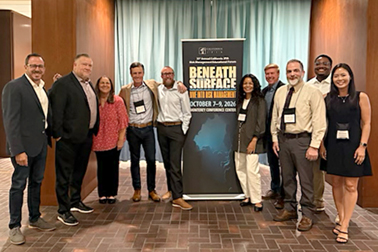
Behind the Claim: How Athens Administrators Supports California JPIA Members
When an agency reports a claim, it sets in motion a coordinated process that California JPIA members may not always see. Behind the scenes, Athens Administrators (Athens) reviews the facts, evaluates coverage and exposure, coordinates with medical and legal professionals, gathers documentation, and works with the member agency to move the claim toward resolution.
“The work behind a claim may not always be visible, but it is essential to protecting the member agency and supporting a fair resolution,” said Athens Claims Supervisor Jesenia Gutierrez.
The scale of that work is considerable. Athens’ 14-person liability team serves 127 member agencies, while its 21-person workers’ compensation team serves 112 member agencies. Together, they managed more than 3,300 open claims on behalf of Authority members and handled more than 4,800 newly reported claims last fiscal year.
Each claim begins with gathering the facts and determining the appropriate next steps. Depending on the claim, Athens may investigate liability, preserve evidence, coordinate medical care, monitor recovery, or support return-to-work efforts. As a claim develops, claims professionals evaluate new information, assess potential exposure, and consider the needs of the injured employee or claimant. Throughout the process, they work toward a fair resolution while protecting the member agency’s interests.
Behind a Liability Claim
A recent claim involved an individual who sustained a serious ankle injury after falling on a set of stairs. Athens worked with the member agency to investigate the circumstances, review photographs, obtain the claimant’s statement and medical records, and evaluate potential liability and defenses.
By developing the facts early and maintaining open communication with both the member agency and claimant, Athens was able to resolve the claim before litigation became necessary. The resolution reduced uncertainty for the member and avoided additional litigation expenses.
Behind a Workers’ Compensation Claim
In another case, an employee sustained injuries to both arms and wrists in an on-duty vehicle accident involving a third party. Resolving the claim required coordination among Athens, the member agency, the Authority, medical providers, defense counsel, and medical-legal professionals.
Athens coordinated treatment, monitored the employee’s recovery and work status, supported the return-to-work process, addressed a disputed additional injury, evaluated future medical needs, and worked through issues related to the third-party recovery. The employee ultimately returned to full duty, and the accepted workers’ compensation issues were formally resolved.
Claims frequently involve many people with different responsibilities. Athens serves as a central point of coordination, helping ensure that relevant information reaches the right people and that important gaps are identified early. The claims professional brings these pieces together while keeping the overall strategy focused on moving the claim toward an appropriate resolution.
“Successful claim outcomes are built through partnerships among Athens, the Authority, and the member agency,” said Athens Division Claims Manager Kevin Fritzsche.
Members can significantly improve the claims process by reporting incidents promptly and providing complete information at the outset.
Agencies can support the process by:
- reporting claims and incidents promptly;
- providing complete information about what occurred;
- identifying witnesses and preserving relevant evidence;
- responding promptly to requests for records or other documentation;
- sharing new information as it becomes available; and
- working closely with Athens and the Authority throughout the claim.
Timely reporting helps preserve evidence and gives Athens the information needed to evaluate claims effectively. Managing thousands of claims each year requires close partnership among Athens, the Authority, and member agencies. Prompt reporting and open communication help support informed decisions and appropriate resolutions.
“Working together from the beginning helps our claims team and member agencies make informed decisions, resolve claims efficiently, and achieve the best possible results,” said Athens Division Claims Manager Emily Gutierrez.
Print Article
Cybersecurity Awareness Training Now Available
The California JPIA is pleased to announce that in-person cybersecurity awareness training is now available for scheduling. This 75-minute course, presented by the Triden Group, the California JPIA’s cybersecurity business partner, is tailored to your agency’s needs.
Topics include:
- Business email compromise (phishing, vishing, impersonation)
- Ransomware and extortion
- Credential and identity theft
- Third-party and supply chain breaches
- Vulnerability exploitation of IT systems
The objective of the training is to raise awareness and teach your agency’s staff what to look for in cybersecurity threats to the organization and its users.
If you are interested in scheduling training for your agency, please let your agency training registrar know, or contact Administrative Analyst Denise Covell.
Print Article
A Year of Learning and Connection: Highlighting the 2026 Academies
By Michelle Aguayo, Training CoordinatorThroughout 2026, California JPIA academies brought members together to learn from subject matter experts, exchange ideas with peers, build new connections, and gain practical knowledge to apply at their agencies. From the Risk Management Academy in February through the Supervisor Academy in September, this year’s programs provided learning opportunities for professionals and officials serving in a variety of roles. As we celebrate another successful academy year, we are also looking ahead to an exciting new lineup in 2027.
Looking Back at 2026
The 2026 academy season featured six programs covering risk management, public safety, elected official leadership, organizational leadership, human resources, and supervision.
At the Leadership Academy, held May 19–21, 2026, at the Allegretto in Paso Robles, sessions focused on developing tools to interact with and lead people effectively. Topics included leadership fundamentals, building and rebuilding trust, the role of trust in organizational adaptability, and difficult decision-making.
The Human Resources Academy, held August 18–20, 2026, at the Gaylord Pacific in Chula Vista, offered sessions on workplace investigations, personnel file maintenance, managing leaves of absence, difficult conversations, building trust, and fostering accountability. One attendee noted, “The speakers at this academy were all quite engaging… made those tough topics more bearable.”
Feedback from the Elected Officials Summit, held April 29–May 1, 2026, at the Gaylord Pacific in Chula Vista, reflected the value of bringing members together. Attendees identified the speakers, relevant topics, opportunities to learn from others, and networking with fellow elected officials among the best aspects of the Summit. Debbie Baker from the City of La Palma commented, “The best aspects of the Summit were the topics, information, and meeting facility.” The California JPIA always holds the best events in every aspect.”
Together, these programs made 2026 a year filled with opportunities to learn, connect, share experiences, and strengthen the knowledge members bring back to their agencies.
Looking Ahead to 2027
Learning and connection will continue in 2027 with six academies planned throughout the year. The schedule includes several programs not offered in 2026, including Parks & Recreation, Executive, Public Works, and Newly Elected Officials academies.
Save the Dates for 2027:
- Parks & Recreation Academy: February 23–25, Tommy Bahama Miramonte, Indian Wells
- Executive Academy: March 24–26, Mission Pacific, Oceanside
- Human Resources Academy: April 20–22, Ava Hotel, Paso Robles
- Public Works Academy: June, date and location TBD
- Newly Elected Officials Academy: August 11–13, Allegretto, Paso Robles
- Supervisor Academy: September 14–16, Zachari Dunes, Oxnard
Requests to register will open approximately three months before each academy, giving members time to identify the programs most relevant to their roles and professional development.
As we close out 2026, thank you to the members, instructors, subject matter experts, and staff who contributed to another successful year of California JPIA academies. We look forward to welcoming members back in 2027 for another year of learning, collaboration, and connection.
For more information about the California JPIA’s academies and summits, please contact Training Coordinator Michelle Aguayo.
Print Article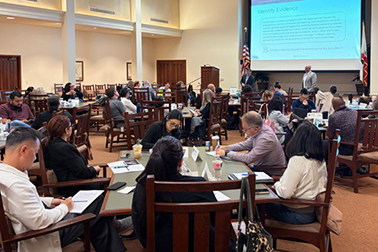
California JPIA Workshop Builds Workplace Investigations Skills
On October 27, 2026, the California JPIA partnered with VM Mastered to deliver a one-day interactive training titled Investigations Essentials Workshop: Fundamentals, Interviewing, and Evidence. This training equipped participants with the foundational knowledge and practical skills needed to conduct effective, thorough, and impartial workplace investigations. Key topics included investigation fundamentals, planning and conducting investigations, collecting evidence, and evaluating the reliability of evidence. This workshop welcomed 47 participants from member agencies, with strong participation and engagement throughout the day.
Kelly Trainer Policky, the Authority’s employment practices manager, shared, “It was wonderful to see so many members participating in this training. Workplace investigations are among the most complex and consequential responsibilities our members undertake, whether conducting them internally or overseeing an outside investigator. Training like this equips members with the knowledge, practical skills, and confidence they need to be effective in their role.”
The Authority is planning to offer this workshop again in spring 2027. Stay tuned for registration details and contact the training department with any questions.
Print ArticleCOVERAGE MATTERS

AB 2529: New Declaration Requirement for Government Claims
Beginning January 1, 2027, California public agencies will need to account for a new requirement applicable to claims presented under the Government Claims Act. Assembly Bill 2529 (AB 2529) amends Government Code section 910.2 to add a declaration regarding the truth and accuracy of a claim. The legislation was signed by the Governor in September 2026.
Under existing law, a claim against a public entity or public employee must be signed by the claimant or by someone acting on the claimant’s behalf. AB 2529 keeps this requirement but adds that the person signing the claim must declare that “upon information and belief, the contents of the claim are true and correct.”
Before January 1, 2027, members are advised to review their claim forms, downloadable PDFs, online claim portals, and internal claim processing procedures. The signature section of claim forms should be revised to incorporate the new declaration. Consult with your agency’s legal counsel for their review and approval of the declaration language. Members should also ensure that staff responsible for receiving and reviewing claims understand the new requirement. Updating claim forms will ensure your agency’s materials accurately reflect the Government Claims Act when the new requirement takes effect.
While AB 2529 focused on Government Code section 910.2, it does not amend Government Code section 910, which establishes the information a claim must contain. The information required in a government claim remains unchanged, and includes:
- the claimant’s name and mailing address;
- the address to which notices should be sent;
- the date, place, and circumstances giving rise to the claim;
- a general description of the injury, damage, or loss;
- the name or names of the public employee or employees causing the injury, damage, or loss, if known;
- and the amount claimed if under $10,000, and if over $10,000 whether it would be a limited civil case, together with the basis of computation of the amount claimed.
If you have any questions, contact your regional risk manager or Liability Program Manager Chris Kustra.
Print ArticleRE: MEMBERS
PRO: FILES

California JPIA Celebrates 10th Anniversary of Maria Daniels
The California JPIA offers a wide variety of member services, and one individual behind that steady support is Administrative Assistant Maria Daniels, who celebrates her 10th anniversary with the Authority this November. From resolving complex database inquiries to guiding member training registrars through registration portals, Daniels ensures that member agencies receive responsive, reliable service.
For Daniels, delivering exceptional member service means taking full ownership of each inquiry from start to finish. “The most rewarding part of my role is having the ability to assist our members with whatever they need,” said Daniels. “I strive to take any issue from womb to tomb, taking extra steps to save the member an additional call or email, guiding someone through a problem and knowing they leave the conversation supported.”
Maria is very reliable,” said Training Manager Ryan Thomas. “You can set your watch to her consistent and helpful service to our members.”
Her dedication to member agency personnel has not gone unnoticed. During the 2022 Training Registrar Academy, Daniels’ name was announced, and she received an unprompted standing ovation from a room full of member representatives, followed by the presentation of the Authority’s Ring of Excellence award. “Receiving that recognition from our members was unforgettable,” said Daniels. “It reinforced how meaningful our daily interactions are to the individuals who manage training across our member agencies.”
Thomas highlighted her consistent commitment to member service, “Maria’s commitment to member service is unparalleled. We have had numerous members compliment her on the diligent assistance she provides on the Training Help Desk. At the Training Registrars Academy, dozens of members—who were excited to meet her in person—complimented her directly or took the time to seek me out and tell me how helpful she is. She was quite the celebrity, and very deservingly so!”
Over the past decade, Daniels has seen the Authority expand both its membership and its educational catalog. The training department has developed specialized, multi-month cohort programs, such as the nine-month Supervisor Essential Skills program, to help local government leaders address workplace behaviors that contribute to liability. Daniels has also assisted members as the Authority enhanced its technical tools, including the Cornerstone learning management system and its Customer Relationship Management (CRM) platform.
“Our systems are becoming more and more user-friendly for our members,” said Daniels. “And, because the system is changing, member questions are changing. As my experience at the Authority has grown, I’m having deeper conversations with members.”
Whether troubleshooting training access or connecting a member with the appropriate risk manager, Daniels remains guided by a clear focus on the public agencies the Authority serves. “Our members are the reason we are here,” said Daniels. “I’m successful when I take care of them!”
The California JPIA congratulates Maria Daniels on her 10th anniversary and thanks her for ten years of dedicated support to the Authority and its membership.
Print Article
California JPIA Recognizes Promotion for Aaron Webb
The California JPIA is pleased to announce the promotion of Aaron Webb from data and underwriting analyst to senior data analyst. Since joining the Authority in November 2020, Webb has combined technical expertise with an analytical approach to support the Authority’s financial operations, strengthen its technology systems, and serve its members.
“At the end of the day, we are stewards of the contributions that our members pay us,” said Webb. “The most efficient way to use public funds is something that I think about a lot.”
Webb initially joined the Authority in a temporary position that transitioned to full-time as his programming and problem-solving skills aligned with the organization’s needs. Over his tenure, his work has expanded to encompass projects that connect data, finance, underwriting, and technology.
“Aaron has a unique ability to leverage complex data to inform real-world decisions,” said Finance Director Jason McBride. “His ability to explain complex analysis in an understandable way to a variety of stakeholders with different backgrounds is even more unique.”
Webb’s responsibilities include collecting payroll and loss data for underwriting, performing annual contribution calculations, coordinating actuarial studies, and developing cost indications for prospective members. Through this work, he helps the Authority evaluate risk and provides analysis that supports financial planning and growth in ways that benefit every member.
“It’s important to understand each individual member, whether they’re large or small, and how we can better serve them,” he said.
He has supported both existing and prospective members, from analyzing the data used in annual contribution calculations to guiding the underwriting process to provide quotes for agencies considering membership. His promotion marks another step in a career shaped by his ability to find practical solutions to the Authority’s evolving needs.
As senior data analyst, Webb will retain his existing responsibilities while helping advance the Authority’s efforts to use technology more efficiently. He sees opportunities to share knowledge gained through these projects with member agencies interested in pursuing similar initiatives.
“Our relationship isn’t transactional with our members,” said Webb. “We work together.”
Among the projects Webb is most excited about is developing a centralized location for storing and integrating the Authority’s data. Bringing this information together could help staff better understand members’ challenges and identify where resources can provide the greatest benefit.
“If all your data is in one place and you’re able to synthesize that data in a harmonious way, you can ask harder-hitting questions and uncover answers that you maybe would not have expected,” said Webb.
As finance, insurance, and risk management continue to evolve, Webb brings experience translating complex challenges into improvements to the Authority’s processes and systems. For him, those improvements support a broader commitment to making the most of the resources entrusted to the Authority by its members.
“Aaron is a tremendous asset to the Authority, not just because of his technical talent, but because of his genuine dedication to our members,” said McBride. “He approaches every project with enthusiasm and curiosity, and I’m excited for the impact he will continue to make in his expanded role.”
The Authority congratulates Aaron on his promotion to senior data analyst and thanks him for his continued dedication to the California JPIA and its members!
Print ArticleLEGAL MATTERS

Tick, Tock: EEOC is Quietly Cutting Employers’ Clock to Respond to EEOC Charges
By Timothy L. Davis, Partner; and Donald V. Lee, Partner
Originally published on October 30, 2026. Reprinted with permission from Burke, Williams, Sorensen, LLP.
Employers, your time to respond to an EEOC Charge of Discrimination may now be as short as 15-days, not the typical 30-day window.
What is Happening?
Historically, employers could expect an initial 30-days to submit a “position statement” after receiving a Charge of Discrimination from the Equal Employment Opportunity Commission (“EEOC”).
Our employment attorneys have noticed a trend in which the EEOC has quietly cut the traditional 30 day deadline to as little as 15 days.
The EEOC has not issued any formal guidance about this significant change. As of the date of this bulletin, the EEOC’s public guidance still advises employers that the deadline to submit a position statement is generally 30 days. (Questions and Answers for Respondents on EEOC’s Position Statement Procedures, EEOC.) A spokesperson for the EEOC has, however, acknowledged that response deadlines can vary from one EEOC office to another.
Why does this matter for employers?
A position statement is an employer’s first opportunity to present its facts, defenses, and supporting evidence in response to an EEOC charge.
According to current EEOC guidance, an “effective position statement” should be clear, concise, complete, and responsive. It should also address each allegation, identify supporting documents and evidence, and raise any applicable defenses. The EEOC also advised that “a well drafted position statement can help [the] EEOC accelerate the investigation and limit requests for additional information.” (Effective Position Statements.)
Even with a typical 30-days to respond, many employers faced challenges with submitting effective position statements, due to inability to interview witnesses, locating policies, reviewing documents, and looping in legal counsel in a timely manner.
However, with a shorter deadline of 15-days to respond, employers are now left with far less time to investigate, gather supporting documents, and prepare an “effective position statement.” This shorter deadline places employers in a bind: submit an incomplete position statement or risk missing the deadline entirely. Both have serious legal consequences, including the risk that an EEOC investigator issues a determination without the employer’s side of the story.
Takeaway
Although no formal guidance or announcement has been made about this significant change, employers should not assume they have the usual 30-days to respond to an EEOC charge. Historically, it was not uncommon for employers forward an EEOC charge to legal counsel several days after receiving notice. However, with a shortened timeframe, it is more critical now than ever for employers to act promptly.
Best Practices to Beat the Clock
Given this significant reduction in an employer’s time to respond to an EEOC charge, some best practices for employers include:
Check the deadline on the EEOC “Notice of Charge of Discrimination”. Employers should not anticipate the usual 30-day timeframe to submit a position statement. Instead, employers should refer to the date specified on the EEOC’s notice, and calendar all deadlines immediately.
Designate Employer’s Representative. Employers should identify a “point person” responsible for processing EEOC charges in a timely manner, calendaring deadlines, gathering documentation, and notifying appropriate personnel and legal counsel.
Contact our labor and employment counsel right away. It is now more important than ever to contact employment counsel upon receipt of an EEOC charge. Early involvement gives us the most time to evaluate the merits of the charge, identify the applicable deadlines, and determine whether an extension is needed. It also gives us the most time to review all documents, interview witnesses, and draft an effective position statement. Stated simply, the sooner we are involved, the more we can do.
Request an Extension of Time Promptly. Although extensions tend to be available, a request does not automatically extend the deadline. The EEOC grants requests for extensions only on a showing of good cause. We can handle these requests with the assigned EEOC investigator on your behalf.
Improve Recordkeeping Practices. A shorter deadline means less time to locate policies and procedures, personnel files, and other relevant documentation. Review your current recordkeeping practices to ensure relevant documents are easy to retrieve when a charge comes in.
Preserve documents and avoid retaliation. Regardless of any shortened timeframe, employers must still retain relevant records and ensure no one is retaliated against for filing a charge or participating in an EEOC investigation.
For further guidance on employer obligations upon receiving an EEOC Charge of Discrimination, contact your legal counsel or the Burke Labor & Employment Practice Group.
Print Article